

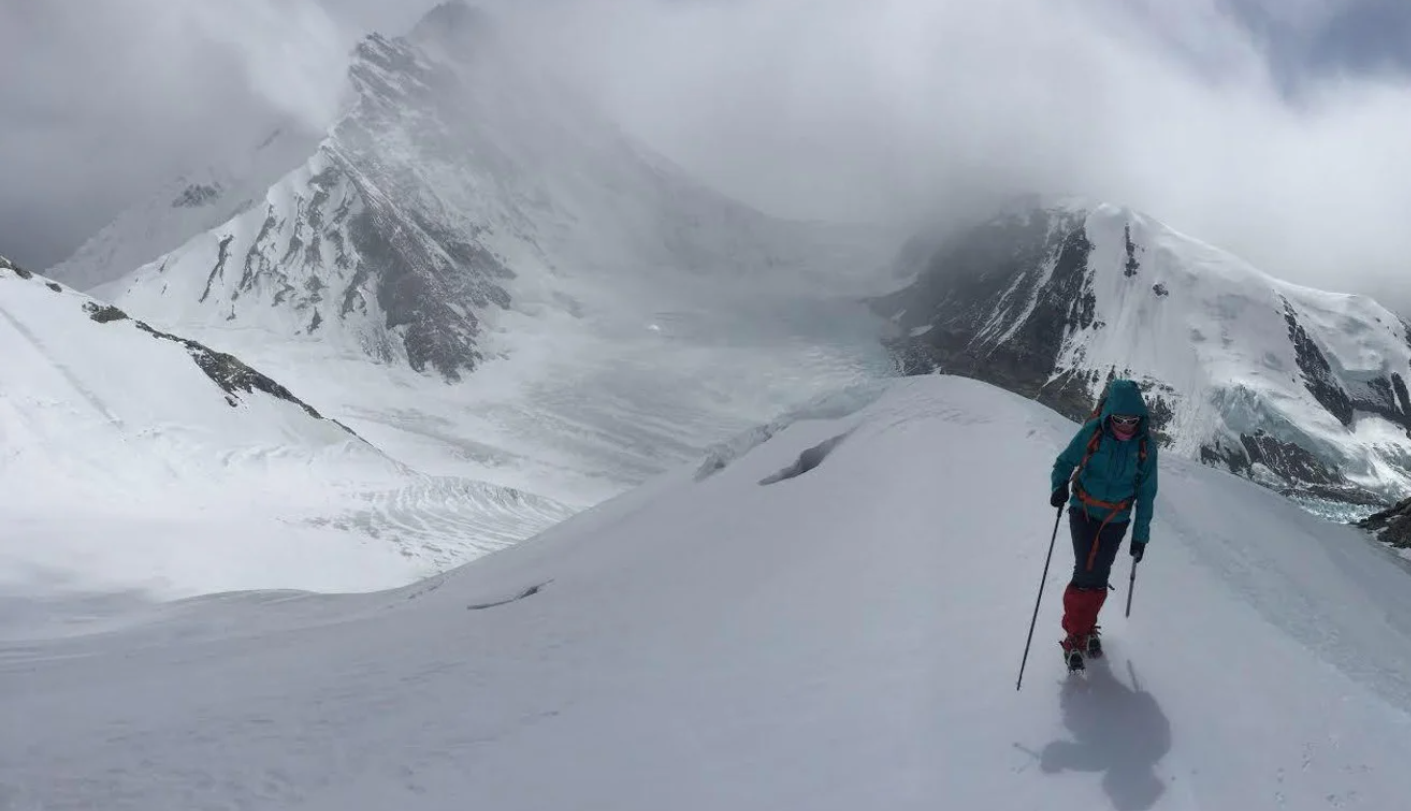

Rising temperatures and shifting weather patterns are making Pakistan’s Karakoram mountain range increasingly hazardous for climbers. In the summer of 2025, mountaineers faced unprecedented challenges, including frequent avalanches, rockfalls, and rapidly melting glaciers that cut short most summit attempts on some of the world’s tallest peaks, including K2 and Broad Peak.
For the first time in decades, veteran climbers and guides observed a significant reduction in snow cover across the region. This left steep rock faces exposed and unstable, greatly increasing the risk of avalanches and falling debris. Mountain guide Baqir Ali, who has spent over 40 years leading expeditions in Gilgit-Baltistan, said the conditions were unlike anything he had ever encountered.
One tragic incident involved German Olympian Laura Dahlmeier, who lost her life to a rockfall while attempting Laila Peak. She had been warned by a local guide to postpone her climb due to poor weather, but she proceeded in alpine style. She was struck by falling rocks at an elevation of 5,700 meters on July 28.
Hungarian climber László Csomor, who spent more than a month at Broad Peak base camp, also decided to abandon his expedition due to frequent rockfalls and avalanches. Despite reaching Camp 3 twice, he was unable to launch a summit attempt. Csomor noted that in a single day, he could hear up to ten avalanches or rockfalls from base camp — a frequency he attributed to the reduced snow cover and warmer temperatures.
Similarly, over 90 climbers at the K2 base camp and around 30 at Broad Peak called off their climbs, returning home without reaching the summits. The season witnessed multiple accidents: a Polish climber broke his leg in an avalanche, and a local porter lost his life on K2’s Camp 1.
High winds, expanding crevasses, and unstable snow have become the new norm. According to László, these are direct consequences of the changing climate. Veteran climber Mingma G of Imagine Nepal also had to cancel his Gasherbrum-II attempt due to avalanche risks.
This year, most of the prominent peaks remained unclimbed. Only Gasherbrum-I and Nanga Parbat saw successful ascents, with about 22 climbers reaching the summit of Gasherbrum-I and 24 reaching Nanga Parbat. Russian mountaineer Denis Urubko and his partner Maria Cardell were among the few to summit Nanga Parbat in alpine style, even establishing a new route. However, Urubko emphasized the growing danger in the mountains due to melting glaciers and unstable terrain.
The retreat of glaciers and increased hazards are not only threatening mountaineers but also the local economy. The mountaineering season, which typically attracts hundreds of international climbers, saw a nearly 50% drop in visitors compared to previous years. With only around 200 climbers arriving this year, many tour operators, porters, transporters, hotel owners, and other service providers have been left with little to no income.
A senior environmental expert attributed the dangerous conditions to shifting snowfall patterns, which now occur later in the year. The snow fails to solidify into stable ice before summer begins, leaving slopes prone to collapse. Additionally, intense heatwaves in June and July intensified snowmelt, further destabilizing the region.
As climate change continues to alter high-altitude ecosystems, the future of adventure tourism in Pakistan’s Karakoram range remains uncertain. The increasing frequency of life-threatening conditions may force mountaineers to reconsider their climbs, and locals dependent on seasonal tourism fear for their livelihoods.
