

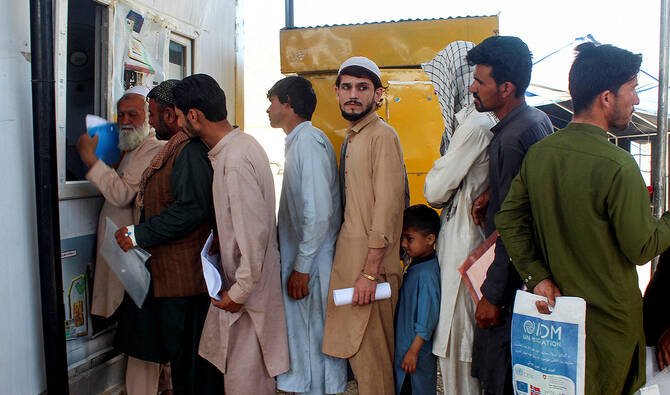

Pakistan has issued a fresh directive calling on Afghans residing in the southwestern part of the country to leave, prompting thousands of people to gather at the border in preparation for their return to Afghanistan.
According to officials in Quetta, the capital of Balochistan province, this renewed repatriation drive is being conducted in a respectful and orderly manner, following instructions received from the home department.
On Friday, government authorities reported that approximately 4,000 to 5,000 Afghans were waiting at the Chaman border crossing, one of the main entry and exit points between Pakistan and Afghanistan. Habib Bingalzai, a senior government official in Chaman, confirmed the significant number of people preparing to return.
On the other side of the border, Abdul Latif Hakimi, head of Refugee Registration in Kandahar province, stated that Afghan authorities were aware of the increased influx of returning nationals.
Over the past several decades, millions of Afghans have sought refuge in Pakistan, fleeing multiple conflicts and wars in their home country. A substantial number also arrived following the Taliban’s return to power in 2021.
In 2023, Pakistan began a deportation campaign targeting Afghan nationals, and this effort was renewed in April when the government revoked hundreds of thousands of residence permits. The authorities warned that failure to comply with the repatriation directives could result in arrests.
Analysts suggest that this mass expulsion is partly aimed at pressuring the Taliban government to strengthen its control over militant groups operating in the border regions. Since 2023, over a million Afghans have reportedly left Pakistan, with more than 200,000 departing since April alone.
The campaign has focused on the approximately 800,000 Afghans who held temporary residence permits, many of whom were either born in Pakistan or have lived there for several decades.
The Pakistani public has shown considerable support for the government’s deportation drive, influenced by growing security concerns and economic challenges associated with hosting a large refugee population. Pakistan’s security forces are under immense pressure along the Afghanistan border, especially in Khyber Pakhtunkhwa and Balochistan provinces, where insurgent attacks have increased.
In fact, last year marked the highest number of deaths from militant attacks in a decade, with the government frequently accusing Afghan nationals of involvement in such activities.
Meanwhile, Iran has launched a similar campaign, deporting over 1.5 million Afghans back across its border. Both neighboring countries continue to struggle with the complex dynamics of hosting large Afghan refugee populations amid regional security and economic challenges.
