

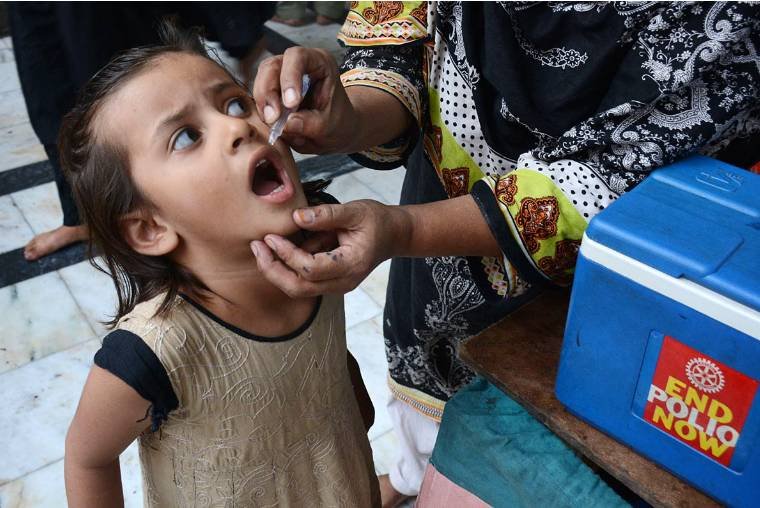

Polio Cases
The National Institute of Health (NIH) confirmed on Sunday that three additional cases of poliovirus have been detected in Pakistan, pushing the total number of cases reported so far this year to 17.
The continued spread of the virus has alarmed health authorities, especially in high-risk areas where vaccination efforts face resistance or logistical hurdles.
According to NIH officials, the newly reported cases include a 15-month-old girl from Lakki Marwat and a 6-month-old girl from North Waziristan — both districts located in the northwestern province of Khyber Pakhtunkhwa (KP) — as well as a 5-year-old boy from Umerkot in the southeastern province of Sindh. These cases further underscore the geographical spread of the virus across provincial lines and the challenges in eradicating the disease.
Khyber Pakhtunkhwa continues to be the most affected province, accounting for 10 of the 17 polio cases recorded so far in 2025. Sindh has reported five cases, while Punjab and Gilgit-Baltistan have each confirmed one case.
The concentration of cases in KP, particularly in districts like North Waziristan and Lakki Marwat, highlights the persistent vulnerability in these regions due to limited healthcare access, vaccine hesitancy, and security-related issues hampering outreach efforts.
Public health experts have expressed serious concern over the resurgence of polio, a highly infectious and incurable disease that primarily affects children under the age of five. While there is no cure for polio, it can be prevented through timely and repeated immunizations, which remain the most effective defense.
The NIH has once again stressed the importance of nationwide polio vaccination campaigns and called on parents to ensure that all eligible children receive the necessary doses.
The institute also warned that any delay in these efforts could reverse years of progress and put more children at risk of lifelong paralysis.
With the global goal of eradicating polio still within reach, Pakistan’s health authorities are now under increasing pressure to intensify surveillance, improve vaccination coverage, and build trust among communities, especially in areas with low immunization rates.
