

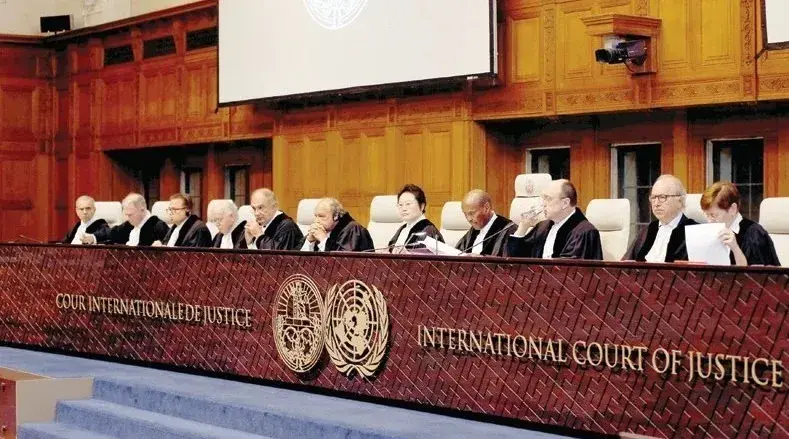

In a groundbreaking move, the International Court of Justice (ICJ) — the highest judicial body of the United Nations — has formally declared climate change an “urgent and existential threat,” marking a pivotal moment in the global effort to address environmental degradation. The advisory opinion, though non-binding, is expected to have profound legal and political consequences, especially in shaping future climate litigation and state responsibilities.
Reading the opinion in The Hague, Judge Yuji Iwasawa stated that greenhouse gas emissions are “unequivocally caused by human activities,” and emphasized that these emissions are not restricted by national borders. The reading of the court’s full opinion was ongoing, but legal experts and environmental advocates have hailed the initial language as a milestone in the climate justice movement.
The opinion follows a request by the UN General Assembly, which had asked the ICJ to clarify two key issues: what are states’ obligations under international law to protect the climate system from human-induced greenhouse gas emissions, and what legal consequences should be faced by states that fail to do so.
Supporters of the ruling gathered outside the court, chanting slogans for climate justice. Legal scholars say that while the opinion is not enforceable by law, it will significantly influence global climate policies and court cases in the years ahead.
Pressure Mounts on Major Emitters as Climate Litigation Grows
Developing nations and small island states, including Vanuatu — which led the initiative to bring the case to the ICJ — have long called for clearer, enforceable international standards to reduce emissions and demand financial support from wealthier polluters. These calls were echoed during the court’s hearings in December 2024.
In contrast, many developed nations argued that existing climate agreements, such as the 2015 Paris Agreement, should guide international obligations. The Paris Agreement, signed by over 190 countries, aims to limit global warming to 1.5°C, but has thus far failed to halt the rise in greenhouse gas emissions.
According to the UN’s most recent Emissions Gap Report, current national policies will likely result in a global temperature rise of over 3°C by the end of the century, far above safe thresholds.
Meanwhile, climate litigation continues to rise globally, with nearly 3,000 cases filed in 60 countries. Though outcomes vary, legal experts view the ICJ’s opinion as a major tool that could support future cases. For example, Fijian activist Vishal Prasad, who helped initiate the ICJ case, said the opinion proves that “climate inaction, especially by major emitters, is not merely a policy failure but a breach of international law.”
While ICJ rulings are advisory, nations are typically hesitant to disregard them. As Joie Chowdhury of the Centre for International Environmental Law noted, “This opinion is applying binding international law, which countries have already committed to.”
