

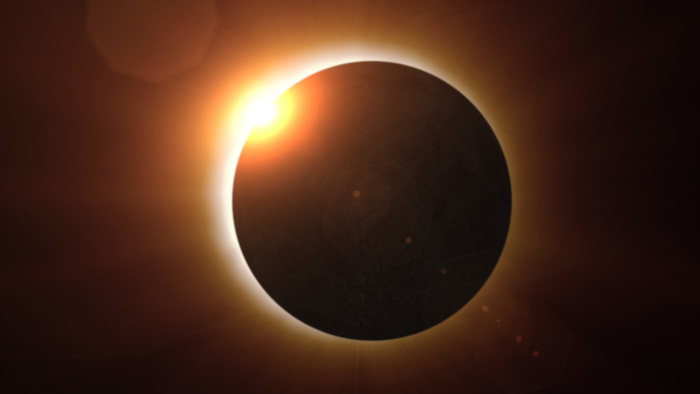

A rare total solar eclipse 2027 is set to amaze millions on August 2, 2027, offering over six minutes of darkness across parts of three continents. With a maximum duration of six minutes and 23 seconds, this total solar eclipse 2027 will become one of the longest of the 21st century, visible from land and marking a major astronomical event between 1991 and 2114.
Unlike most eclipses that last fewer than three minutes, the total solar eclipse 2027 will allow for prolonged observation of the solar corona. For skywatchers and scientists alike, it promises an extraordinary opportunity to experience a rare and immersive celestial phenomenon.
The path of totality, where the Moon completely covers the Sun, will begin over the Atlantic Ocean and stretch across southern Spain, northern Morocco, Algeria, Tunisia, Libya, central Egypt, Sudan, Saudi Arabia, Yemen, and Somalia. The eclipse will end over the Indian Ocean near the Chagos Archipelago. This makes the total solar eclipse 2027 a unique cross-continental event.
Viewers in Egypt, particularly in cities like Luxor, are expected to enjoy more than six minutes of total darkness. Libya is also considered one of the best locations to witness the eclipse due to its typical dry August weather. The shadow of the total solar eclipse 2027 will be about 258 kilometers wide, ensuring a wide viewing corridor.
In terms of local timing, totality will occur between 1:30pm and 2:00pm CEST in southern Spain, and between 2:00pm and 2:30pm EET in Egypt and Libya. Unfortunately, most of India will miss out on the event, except for parts of its far western edge, which might see a slight partial eclipse during sunset.
What sets the total solar eclipse 2027 apart is the cosmic alignment of multiple rare factors. Earth will be near aphelion, meaning it is farthest from the Sun, making the Sun appear smaller. Meanwhile, the Moon will be at perigee, its closest point to Earth, making it appear larger. This optical effect enhances the dramatic visibility of the eclipse.
Moreover, the path of totality lies near the equator, slowing the Moon’s shadow as it travels across the Earth. This rare positioning is a significant reason why the total solar eclipse 2027 will last unusually long.
With its historic length and broad geographic visibility, the total solar eclipse 2027 is anticipated to be the most spectacular solar event of this century. Stargazers, astronomers, and travelers are already planning to be in the right place to witness this unforgettable spectacle.
