

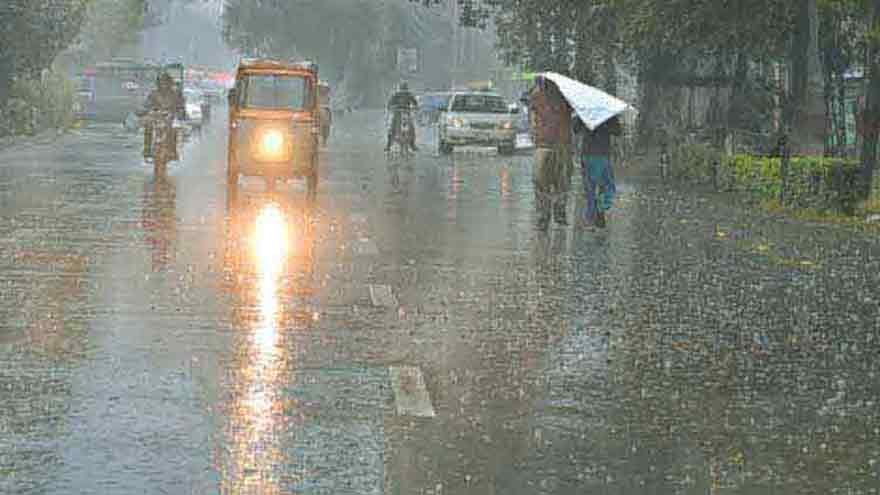

Monsoon rains continue to batter large parts of Pakistan, unleashing severe flooding, landslides, and damage to infrastructure, with forecasts indicating the wet spell will persist until July 13. After a brief lull, another strong weather system is also expected to arrive early next week.
According to Deputy Director of the Meteorological Department, Irfan Virk, heavy downpours are likely in upper Khyber Pakhtunkhwa, Azad Jammu and Kashmir, northeast Punjab, and central Punjab. He cautioned that ongoing rainfall could trigger further urban flooding and landslides, especially in mountainous regions.
In Islamabad and Rawalpindi, early morning rain caused Korang Nullah to overflow, sweeping away a motorcyclist named Mohsin who remains missing despite rescue efforts. Floodwaters submerged houses in low-lying areas; although water levels have receded, thick layers of mud now block roads and alleys, leaving residents stranded.
Elsewhere, a cloudburst in Muzaffarabad destroyed several homes and carried away dozens of cattle. Landslides in Leepa Valley cut off key roads, isolating remote communities. In Sarai Naimat Khan (Haripur), roads were washed away, compounding the devastation.
In Abbottabad, swollen rivers and canals inundated settlements. Heavy rainfall also struck Bhimbher and Neelum, worsening the situation. Flash floods in Diamer damaged farmland, killed livestock, and destroyed a connecting bridge in Batoga and Khanar areas.
Cities across Punjab—including Sialkot, Jhelum, Attock, Sheikhupura, Kasur, Hassan Abdal, Pindi Bhattian, Muridke, Daska, and Ferozwala—faced widespread waterlogging and drainage issues.
While the monsoon has brought some relief from scorching summer heat, officials urge people to take precautions and avoid unnecessary travel, particularly in flood-prone and hilly regions.
Data from the Provincial Disaster Management Authority (PDMA) showed Khanewal received the heaviest rainfall in Punjab at 51mm, followed by Sahiwal (44mm), Rawalpindi (42mm), Murree (41mm), Lahore (23mm), Okara (30mm), and Mandi Bahauddin (27mm).
PDMA Punjab Director General Irfan Ali Kathia warned that further heavy showers are expected in the next 24 hours, advising citizens to stay clear of rivers, canals, and streams. “Section 144 has been enforced near vulnerable water bodies to prevent accidents,” Kathia said. He also urged people to avoid swimming in open water channels and to steer clear of living in mud houses or unsafe buildings during this period.
The Meteorological Department predicts continued monsoon activity, with strong winds, thunderstorms, and heavy rain likely in Punjab, Khyber Pakhtunkhwa, Gilgit-Baltistan, Kashmir, and Islamabad. Islamabad recorded 36mm of rain, Lahore saw 26mm, and Sheikhupura reported 23mm.
Khyber Pakhtunkhwa areas like Balakot (40mm), Malam Jabba (28mm), and Kakul (13mm) also experienced rain, while Bagrot in Gilgit-Baltistan recorded 7mm.
The National Disaster Management Authority (NDMA) separately warned of possible flooding in northern rivers and streams, including Hunza, Shegar, Khunjerab, Haspar, Baraldo, and Hoshe in Gilgit-Baltistan. Locals and tourists have been urged to exercise caution and avoid unnecessary travel near riverbanks.
Due to continuous rain and glacial melting, landslides remain a risk in Gilgit, Skardu, Astore, Diamer, Hunza, Ganche, and parts of Azad Kashmir such as Muzaffarabad, Neelum Valley, and Rawalakot, according to the NDMA.
