

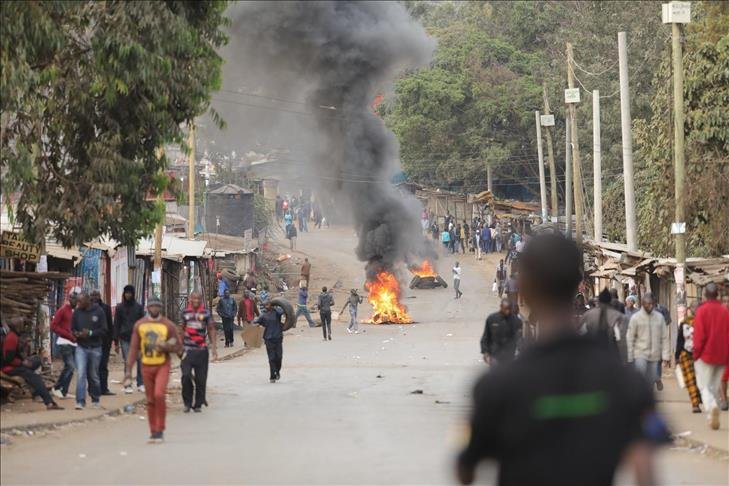

Kenyan police opened fire on demonstrators in Nairobi on Monday during rallies marking the 35th anniversary of pro-democracy protests, with authorities confirming that 11 people were killed nationwide in the latest wave of anti-government unrest.
The protests have been reignited by public outrage over the death of blogger Albert Ojwang, who died in police custody last month. His death has galvanized demonstrators and intensified anger over alleged state abuses, drawing hundreds of people onto the streets.
Journalists witnessed police firing at advancing protesters in Nairobi’s Kangemi suburb. One protester was later seen lying motionless on the road, bleeding from a gunshot wound.
According to the Eagle Nursing Home, six people were admitted with injuries from the clashes, and two later died of gunshot wounds. A separate source at Kenyatta National Hospital said 24 injured individuals were being treated, though details on the nature of their injuries were not disclosed.
In a statement, Kenyan police confirmed 11 fatalities and 52 injured officers, along with reports of property damage, looting, and vehicle destruction. The statement did not specify who was responsible for the killings.
Since a wave of youth-led protests erupted in June 2024, initially triggered by tax hikes, the movement has expanded to address corruption, police brutality, and enforced disappearances of government critics. Law enforcement has since deployed heavily across the capital.
On Monday, police used tear gas and water cannons to disperse crowds moving from Kangemi toward central Nairobi. Clashes erupted later in the day, with police firing live rounds as protesters surged toward them.
The Kenya National Commission on Human Rights (KNCHR), a government-funded watchdog, raised serious concerns, reporting sightings of unidentified, hooded men in unmarked vehicles, allegedly participating in the crackdown. A standing court order requires police officers to be clearly identifiable after previous accusations of plainclothes officers firing on crowds.
KNCHR further alleged that armed gangs wielding whips and machetes appeared to be working in tandem with police in both Nairobi and the Rift Valley town of Eldoret.
Protests were also reported in Nyeri, Embu, and the lakeside city of Nakuru, where mounted police dispersed stone-throwing demonstrators.
Authorities blocked major roads into Nairobi and restricted movement within the city. The usually bustling streets were left nearly empty except for protesters on foot. Most schools and at least one major shopping mall closed in anticipation of violence.
