

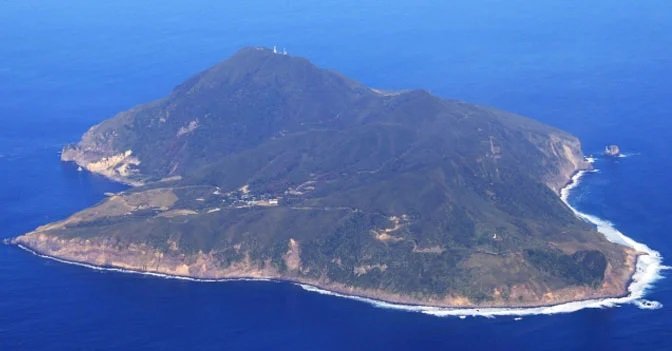

Dozens of residents have fled remote islands in southern Japan after the region was rocked by nearly 1,600 earthquakes over the past few weeks, local officials confirmed Monday.
The hardest-hit area, Akuseki Island, experienced a 5.1-magnitude tremor overnight, but no significant structural damage has been reported, according to Mayor Genichiro Kubo, who is based on a neighboring island.
Despite the lack of physical damage, the relentless seismic activity since June 21 has taken a psychological toll on the small island communities. Constant tremors have disrupted daily life and left many residents exhausted and sleep-deprived.
Of Akuseki’s 89 residents, 44 had evacuated to the regional center of Kagoshima by Sunday. An additional 15 people left from another nearby island, Kubo said during a press briefing.
The municipality comprises seven inhabited and five uninhabited islands, located approximately 11 hours by ferry from Kagoshima.
As of early Monday, the region has recorded 1,582 earthquakes, in what seismologists describe as a seismic swarm. Experts believe the activity may be linked to an underwater volcano and magma movement, though the exact cause remains uncertain.
“We can’t predict what might happen or when this will end,” Kubo said. “We’re in uncharted territory.”
A similar spike in seismic activity occurred in September 2023, when the area recorded 346 quakes, according to the Japan Meteorological Agency.
Japan, located on the tectonically volatile Pacific “Ring of Fire”, is one of the world’s most earthquake-prone nations, experiencing around 1,500 tremors annually—roughly 18% of global seismic activity.
Concerns over a major quake have also been amplified by social media speculation and the reissue of a manga that predicted a catastrophe on July 5, 2025—a date that passed without incident. Such rumors have reportedly led some foreign tourists to delay or cancel trips to Japan.
