

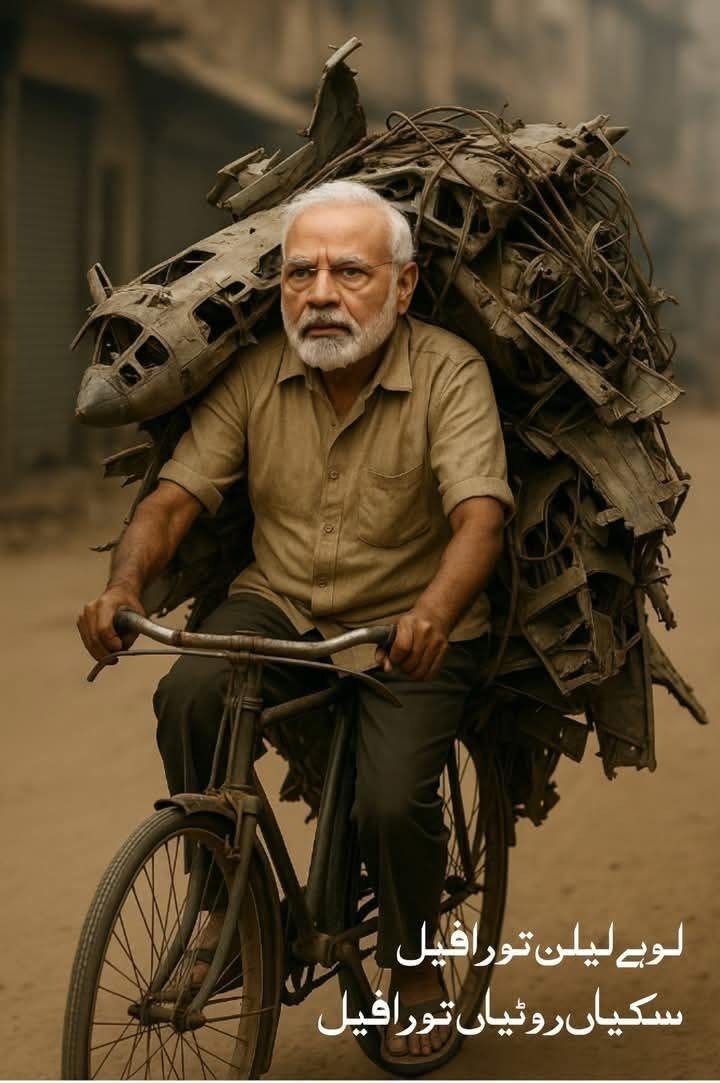

An Indian naval officer has acknowledged that Indian fighter jets were shot down by Pakistani forces during the military confrontation between the two countries in May, attributing the losses to restrictions imposed by New Delhi on Indian military operations.
Captain Shiv Kumar, serving as the defence attaché at the Indian Embassy in Jakarta, made the remarks during a seminar in Indonesia. While the comments initially drew little attention, they resurfaced after The Wire, an Indian news outlet, reported them on Sunday, triggering a political firestorm back home.
India’s opposition party, the Indian National Congress, called the statement a damning “indictment” of Prime Minister Narendra Modi’s leadership and accused the government of compromising national security for political optics.
What happened on May 7?
Tensions between India and Pakistan flared on May 7 when India launched Operation Sindoor, targeting what it described as terrorist infrastructure across nine sites in six cities within Pakistan and Pakistan-administered Kashmir.
Pakistan, however, claimed that the missile strikes resulted in the deaths of dozens of civilians and several military personnel. In retaliation, Islamabad said its forces downed six Indian fighter jets, including at least three Rafale aircraft — a major blow to the Indian Air Force. Pakistan’s military spokesperson, Major General Ahmed Sharif Chaudhry, stated that all the jets were brought down within Indian territory.
Despite differing narratives, both sides agreed on one key point: no aircraft crossed into the other’s airspace during the confrontation. The conflict soon escalated into reciprocal missile and drone attacks before a ceasefire was declared on May 10, which U.S. President Donald Trump claimed to have brokered on Indian leaders request.
What did Captain Kumar say?
At the seminar hosted by Air Marshal Suryadarma University in Indonesia, Captain Kumar acknowledged aircraft losses, albeit fewer than what was being claimed by the Indonesian speaker.
“I may not agree that we lost so many aircraft, but I do agree we did lose some,” Kumar said.
He then attributed the losses to political limitations placed on the military by India’s leadership. “That happened only because of the constraints given by the political leadership to not attack the military establishment or their air defence,” he added, suggesting that these orders limited India’s strategic response during the operation.
Kumar’s remarks have since fueled political controversy in India, with critics questioning whether the government’s directives undermined the armed forces’ effectiveness during a high-stakes military exchange.
