

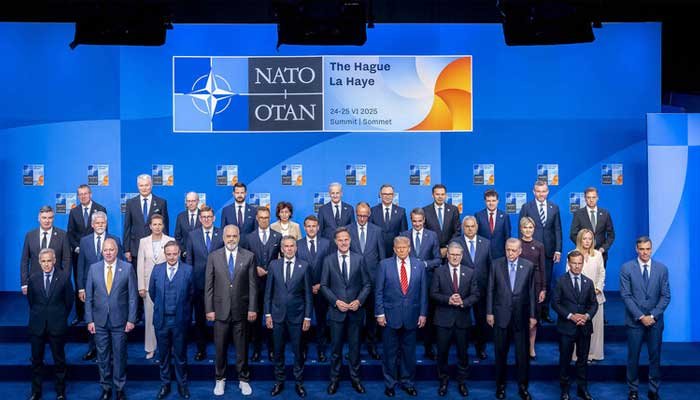

In a strong show of unity, NATO has officially labeled Russia a “long-term threat” to its collective security and announced a major increase in defense spending, pledging that all 32 member states will allocate 5% of their GDP to defense by 2035.
The decision came during the alliance’s latest high-level summit, where leaders emphasized the need to strengthen NATO’s posture in the face of what they described as persistent and growing aggression from Moscow.
“We face profound security threats, in particular from Russia,” the joint declaration stated, while underscoring a continued commitment to supporting Ukraine, whose security was described as directly linked to the alliance’s own stability.
The move is also seen as a strategic signal to U.S. President Donald Trump, who has repeatedly criticized European allies for underfunding defense and questioned NATO’s collective defense clause — Article 5 — just days before the summit. Trump told reporters the clause “depends on your definition,” raising concerns about future U.S. commitments.
Despite the remarks, NATO Secretary General Mark Rutte assured that Trump remained “totally committed” to the alliance’s core principles, a stance reaffirmed in the summit’s concluding statement.
On the other side, Russian President Vladimir Putin dismissed the summit’s declarations, insisting Moscow would “counter all threats that arise.” Putin continues to frame his war in Ukraine as part of a broader standoff with the West, while demanding NATO halt further expansion — a demand Ukraine and its allies have rejected.
While NATO leaders reiterated their “enduring sovereign commitments” to Ukraine, this year’s language was noticeably more cautious, avoiding explicit blame on Russia for the full-scale invasion in 2022 — a notable shift from earlier summit declarations.
Still, the alliance made clear that boosting military readiness and long-term deterrence is now a top priority, especially with the war in Ukraine grinding on and global power dynamics shifting rapidly.
By setting a 5% GDP defense target, NATO is signaling a long-term investment in security, intended both to deter adversaries and to maintain unity within its own ranks.
