

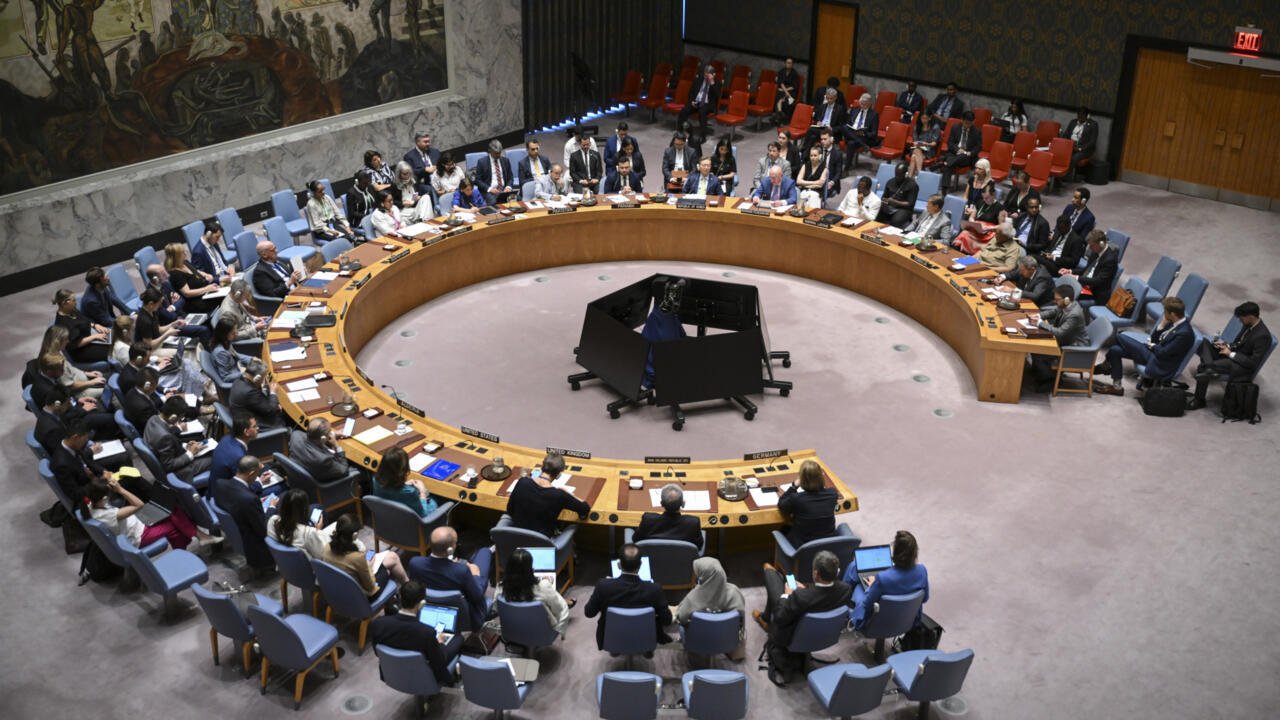

Eighty years ago, in the aftermath of World War II, representatives from 50 nations signed the United Nations Charter on June 26, 1945, in San Francisco, with the goal of protecting future generations from the devastation of war.
UN Secretary-General Antonio Guterres recently described the Charter as a “promise of peace, dignity, and cooperation among nations.” However, critics argue that the UN has consistently fallen short in upholding these principles, as conflicts continue to rage across the globe.
Foundations and Principles
The UN Charter, which came into force on October 24, 1945, outlines core principles of international relations across 19 chapters and 111 articles. These include the peaceful resolution of disputes, the sovereignty and equality of states, humanitarian collaboration, and the protection of human rights.
Chapter VII of the Charter grants the UN Security Council the authority to impose sanctions or authorize military action in response to threats to international peace. It also established key UN bodies such as the Security Council, the General Assembly, the Secretariat, and the International Court of Justice.
Despite being a cornerstone of the postwar international order, the Charter is notoriously difficult to amend. The United Nations now includes 193 member states.
Growing Criticism and Disregard
While the Charter’s ideals are noble, critics note that its principles have been repeatedly violated over the decades. Persistent disagreements among member states, especially around issues like self-determination, sovereignty, and self-defense have weakened its authority.
One recent example includes Iran’s claim, supported by China, that the United States violated the Charter by launching strikes on Iranian nuclear sites. Washington defended the action under the doctrine of “collective self-defense.”
Gissou Nia, a fellow at the Atlantic Council, pointed to the failure to address the “crime of aggression” in cases like Russia’s war in Ukraine or the U.S. invasion of Iraq. “When such violations go unpunished, they set a precedent that others follow,” she said. Nia emphasized the importance of providing credible evidence for claims of self-defense, warning that misuse of this justification erodes the Charter’s legitimacy.
Russia’s 2022 invasion of Ukraine was condemned by both the UN General Assembly and Secretary-General Guterres, but not by the Security Council, where Russia holds veto power.
Although the Charter includes provisions to expel states that persistently violate its terms, this measure has never been enacted. The most significant disciplinary action was in 1974, when South Africa was suspended from the General Assembly over apartheid, a suspension that lasted 20 years.
