


Ceasefire
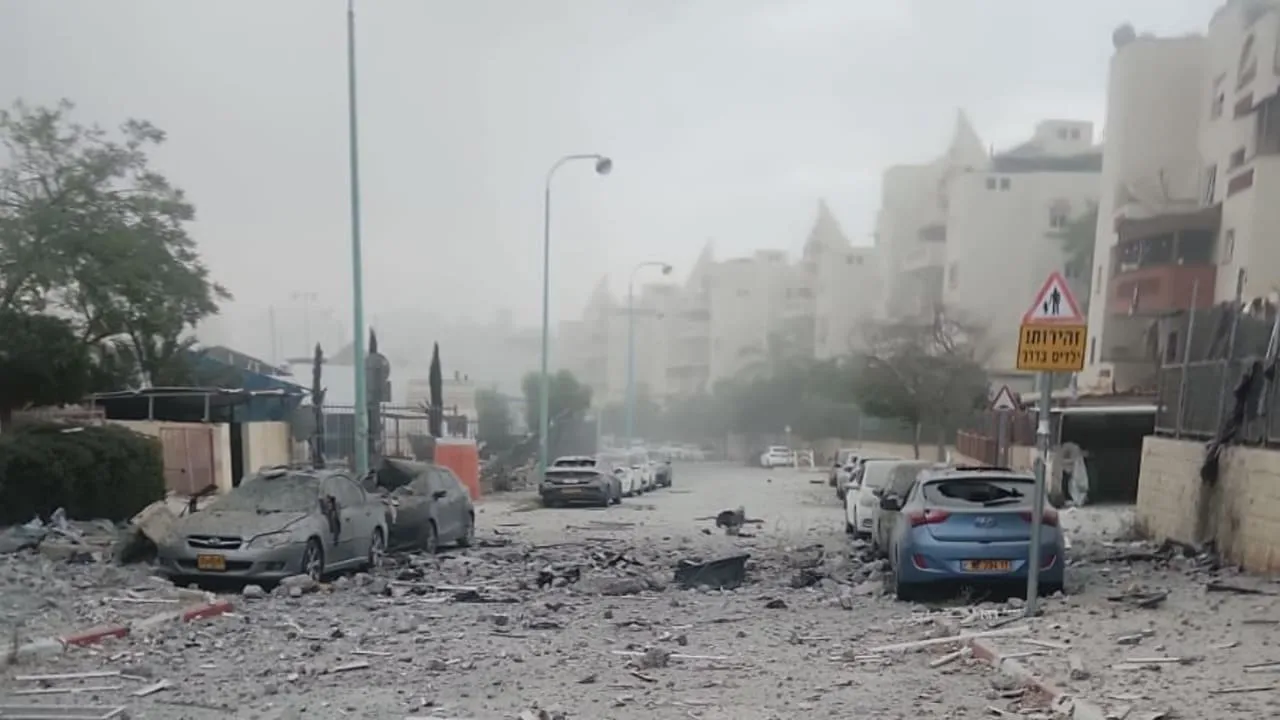
Israel’s emergency medical service, Magen David Adom, has confirmed that five people were killed and around 20 others sustained injuries in a recent missile strike, just hours after U.S. President Donald Trump declared a “complete ceasefire” between Israel and Iran, marking the supposed end of a 12-day war.
According to Israeli military sources, Iran launched multiple waves of missile attacks on Tuesday, targeting several areas including Tel Aviv and Beersheba in southern Israel.
The missile barrage caused significant damage to buildings and infrastructure. Among the casualties, three people were reported dead in Beersheba—the first fatalities recorded in Israel since Trump announced the ceasefire late Monday night.
Eyewitnesses reported hearing explosions in Tel Aviv and other southern regions. The Israeli military confirmed that six separate waves of missile strikes were launched by Iran. The attacks appeared to contradict the terms of the ceasefire reportedly brokered by Trump during a phone call with Israeli Prime Minister Benjamin Netanyahu. The agreement was contingent upon Iran refraining from further hostilities.
President Trump took to his social media platform, Truth Social, to declare the end of what he called “THE 12 DAY WAR,” applauding both nations for their “stamina, courage, and intelligence.” However, the situation on the ground remains volatile.
Iran’s Foreign Minister Abbas Araqchi stated early Tuesday that Iran’s agreement to a ceasefire was conditional and would only be honored if Israel halted its “illegal aggression” against Iran by 4 a.m. Tehran time (00:30 GMT). He further emphasized that Tehran’s final decision to cease military operations was still pending.
Iranian state-affiliated media reported that Tuesday’s missile launches marked the final round of strikes before the ceasefire was set to take effect. Trump later suggested the ceasefire process would unfold in phases, allowing both sides time to complete ongoing operations before fully committing to a halt in hostilities.
Meanwhile, behind-the-scenes diplomatic efforts intensified. Qatar’s Prime Minister Sheikh Mohammed bin Abdulrahman Al Thani played a key role in securing Iran’s tentative agreement to the ceasefire during a call with Tehran’s officials.
The White House confirmed that Vice President JD Vance, Secretary of State Marco Rubio, and special envoy Steve Witkoff were all in contact with Iranian counterparts, either directly or indirectly, during the negotiations.
Despite these efforts, regional stability remains fragile. The Israeli military issued two evacuation warnings for Tehran residents within a two-hour span, underscoring fears of further escalation. Alarms were also triggered in the Golan Heights due to concerns over potential aerial threats.
Earlier, Israel, supported by U.S. military operations, conducted airstrikes on key Iranian nuclear facilities using massive bunker-buster bombs, targeting underground sites in Fordow, Isfahan, and Natanz.
These strikes were part of a broader campaign Israel described as necessary to dismantle Iran’s alleged efforts to develop nuclear weapons. Iran has consistently denied seeking nuclear arms, although Supreme Leader Ayatollah Ali Khamenei recently declared that if Iran ever chose to pursue them, “no one could stop us.”
The international community remains on edge. Iran’s population centers, especially Tehran, have experienced heavy bombing, prompting large-scale evacuations. Despite Trump’s assertions that the U.S. seeks only to eliminate Iran’s nuclear capabilities—not to trigger a full-scale war—the scale and intensity of the strikes suggest otherwise.
U.S. Vice President JD Vance defended the administration’s actions, claiming on Fox News that Iran is no longer capable of developing a nuclear weapon due to the destruction of critical infrastructure. While Trump and his allies cite intelligence suggesting Iran was close to acquiring a bomb, U.S. intelligence agencies continue to assess that Tehran is not actively pursuing nuclear weapons.
Markets responded positively to the ceasefire announcement, with S&P 500 futures rising 0.4% and oil prices falling amid reduced fears of supply disruption in the Gulf region. However, with missile fire still being exchanged, and both sides wary of each other’s intentions, peace remains uncertain despite diplomatic declarations.
