

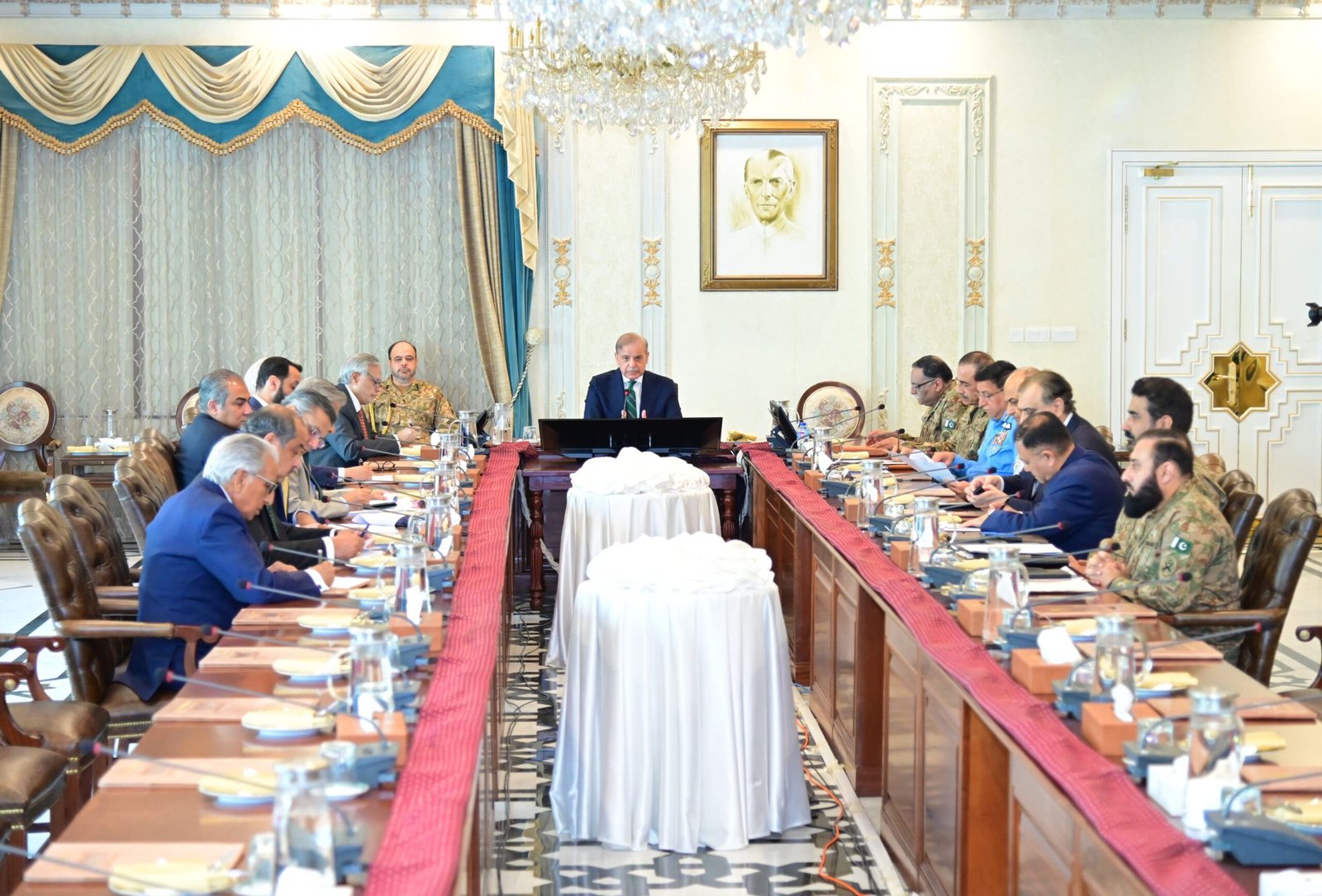

ISLAMABAD: An emergency meeting of Pakistan’s National Security Committee (NSC) is scheduled for today (Monday) to assess the regional situation following the United States’ airstrikes on three nuclear facilities in Iran.
The high-level session, to be chaired by Prime Minister Shehbaz Sharif, includes senior civil and military leadership and serves as the country’s top forum for national security decisions. Sources within the Prime Minister’s Office (PMO) confirmed to Dawn that the meeting will take place this evening.
Chief of Army Staff (COAS) Field Marshal Asim Munir, who recently returned from a visit to Washington, will attend the session. He is expected to brief the committee on his discussions with U.S. President Donald Trump during his trip.
Pakistan Strongly Condemns U.S. Strikes
The Pakistani government has condemned the U.S. airstrikes, which occurred just days after Field Marshal Munir’s engagement with President Trump. Prime Minister Shehbaz Sharif expressed his disapproval during a phone call with Iranian President Masoud Pezeshkian, also denouncing continued Israeli aggression in the region.
According to an official PMO statement, the prime minister described the U.S. strikes as a serious breach of international law and a violation of the International Atomic Energy Agency (IAEA) statutes, particularly because the targeted facilities were under IAEA oversight.
Sharif reaffirmed Pakistan’s “unwavering solidarity” with Iran and offered condolences for the lives lost in the attacks. He emphasized Iran’s right to self-defence under Article 51 of the United Nations Charter, while urging restraint and a return to diplomacy.
“Dialogue is the only viable path forward,” Sharif said, offering Pakistan’s readiness to play a constructive role in de-escalating tensions.
President Pezeshkian thanked Pakistan for its support and solidarity during this critical time.
In a separate statement, the Foreign Office echoed the condemnation, calling the U.S. strikes a violation of international norms and warning of the potentially grave consequences of further escalation.
“We urge all parties to uphold international law and engage in dialogue to prevent further destabilization of the region,” said the FO spokesperson.
