


Israel-Iran Air War
As the deadly air war between Israel and Iran enters its second week, diplomatic efforts led by European powers have intensified in a bid to de-escalate a conflict that continues to claim civilian and military lives on both sides.
On Friday, Iran firmly rejected any possibility of returning to negotiations over its nuclear program while Israeli airstrikes persist. “There will be no talks under fire,” Iranian Foreign Minister Abbas Araqchi said in an interview with state television. The statement comes as European officials step up pressure on Tehran to reengage diplomatically and avoid further escalation.
The ongoing conflict was triggered last Friday when Israel launched strikes against Iran, claiming its goal was to prevent Tehran from developing nuclear weapons. Iran responded with missile and drone attacks, targeting Israeli sites in retaliation.
While Iran maintains its nuclear program is for peaceful purposes, Israel has struck nuclear research facilities, missile production centers, and civilian areas, including hospitals, killing at least 639 people according to Iran’s Human Rights Activists News Agency. Israel has reported over two dozen civilian deaths from Iranian missile strikes, though neither side’s casualty numbers could be independently verified.
Israeli Prime Minister Benjamin Netanyahu has suggested that the ultimate outcome of the conflict may be regime change in Iran, stating, “That may be a result, but it’s up to the Iranian people to rise for their freedom.” Iran, meanwhile, insists its attacks are focused on military infrastructure but has also acknowledged accidental hits on civilian facilities, including a hospital in Beersheba.
As violence escalates, Europe is ramping up diplomatic outreach. British Foreign Minister David Lammy, along with his French and German counterparts and EU foreign policy chief Josep Borrell, are meeting Iranian officials in Geneva in hopes of reopening dialogue. “Now is the time to put a stop to the grave scenes in the Middle East and prevent a regional escalation that would benefit no one,” Lammy said.
U.S. Secretary of State Marco Rubio has also been engaged, consulting with leaders from France, Italy, and Australia. The U.S. State Department reaffirmed that Washington and its allies remain united in their stance: “Iran can never develop or acquire a nuclear weapon.” Rubio is expected to brief President Donald Trump, who is holding a national security meeting to decide the extent of possible U.S. involvement in the crisis.
Although Trump has issued both threats and calls for restraint, he has yet to make a definitive decision. Sources say his special envoy to the region, Steve Witkoff, has been in contact with Iran’s foreign ministry. The White House noted a decision on U.S. involvement could come within two weeks—though critics caution that Trump often uses “two weeks” as a vague, non-binding deadline.
On the battlefield, the intensity of strikes continues to rise. On Friday, a missile from Iran struck near residential and industrial buildings in Beersheba, Israel’s largest southern city, causing significant damage and injuring at least six people. Footage from the scene showed burning cars, shattered windows, and large plumes of smoke. Iran claimed it was targeting military headquarters near the area, which Israel has denied.
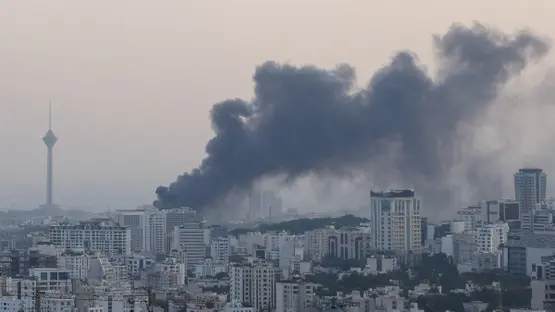
In retaliation, Israeli forces bombed central Tehran overnight, claiming to have hit a missile development site and a nuclear research facility. Israel has also hinted at opening a new front against Hezbollah, Iran’s Lebanese ally, after the group voiced readiness to intervene on Tehran’s behalf.
Meanwhile, Russia and China have condemned Israel’s actions and called for an immediate ceasefire, warning of a wider regional war. The Iranian government, facing the most serious external threat since the 1979 Islamic Revolution, remains defiant. However, domestic dissent remains muted.
Despite long-standing grievances with the regime, many Iranian activists say the national emergency has paralyzed protest movements. “In such horrifying circumstances, people are solely focused on saving themselves, their families, their compatriots, and even their pets,” said Atena Daemi, a well-known activist who spent years in Iranian prisons.
As the crisis deepens, the world watches to see whether diplomacy can prevail over escalating violence, and whether key players—particularly the United States—will be drawn more deeply into yet another Middle East conflict.
