


Israeli Strikes
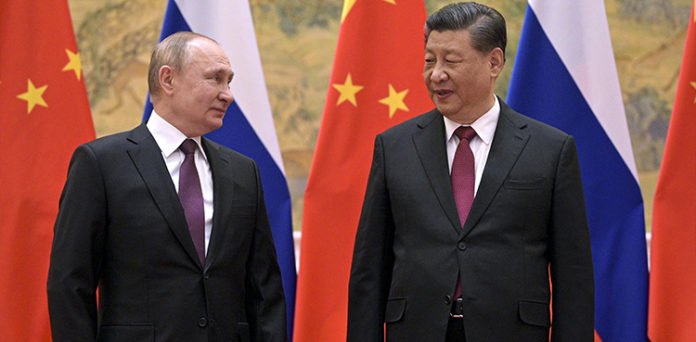
In a significant diplomatic development, Russian President Vladimir Putin and Chinese President Xi Jinping held a telephone conversation on Thursday to discuss the escalating conflict between Israel and Iran.
According to the Kremlin, both leaders condemned Israel’s recent military strikes on Iranian territory and emphasized the urgent need for de-escalation in the Middle East.
Kremlin aide Yuri Ushakov briefed reporters on the call, stating that both Russia and China “strongly condemn Israel’s actions, which violate the UN Charter and other norms of international law.” The condemnation underscores the growing international unease over the intensifying conflict, now entering its seventh day, and the broader risks it poses to regional and global stability.
Putin and Xi agreed that there is no military solution to the ongoing crisis, including issues related to Iran’s nuclear program. Both leaders stressed that a resolution must be pursued exclusively through political dialogue and diplomatic negotiations.
Russia has already warned of the catastrophic consequences that could arise from further escalation and has urged restraint from all parties, particularly the United States.
President Putin, who has positioned Russia as a potential mediator in the conflict, has been actively engaging with global and regional leaders in recent days. He has spoken with U.S. President Donald Trump, Israeli Prime Minister Benjamin Netanyahu, and Iranian President Masoud Pezeshkian, offering Moscow’s assistance in mediating a ceasefire and initiating peace talks. However, as of now, no party has accepted Russia’s offer.
During his call with Xi Jinping, Putin reiterated Russia’s readiness to mediate, a proposal that reportedly received strong backing from the Chinese president.
Ushakov stated that Xi supports the mediation effort, believing it could help defuse the current crisis. The two leaders agreed to maintain close coordination and communication in the coming days to monitor the situation and explore further diplomatic avenues.
Meanwhile, China has publicly called for an immediate halt to hostilities between Israel and Iran. At a press briefing on Thursday, Chinese Foreign Ministry spokesperson Guo Jiakun urged all parties—particularly Israel—to prioritize peace and the well-being of people across the region.
Guo emphasized China’s consistent opposition to the use of force in international relations, reiterating Beijing’s stance against any actions that infringe upon the sovereignty and territorial integrity of sovereign states.
As tensions rise, international responses are diverging. While Russia and China push for restraint and diplomacy, the United Kingdom is signaling a different approach.
UK Shadow Foreign Secretary Priti Patel declared that the Conservative Party would support military action against Iran if the government deemed it necessary. Speaking during a televised interview, Patel stated that while peaceful resolution is the goal, the UK must be ready to act to prevent Iran from acquiring nuclear weapons.
Patel further criticized the British government’s handling of the crisis, particularly its efforts to evacuate British nationals from Israel. She called the current response inadequate and urged officials to improve evacuation efforts and safeguard UK citizens in the region.
With diplomatic channels now engaged and major powers weighing in, the coming days will be crucial in determining whether the region edges closer to a broader conflict or pulls back toward dialogue and de-escalation.
