

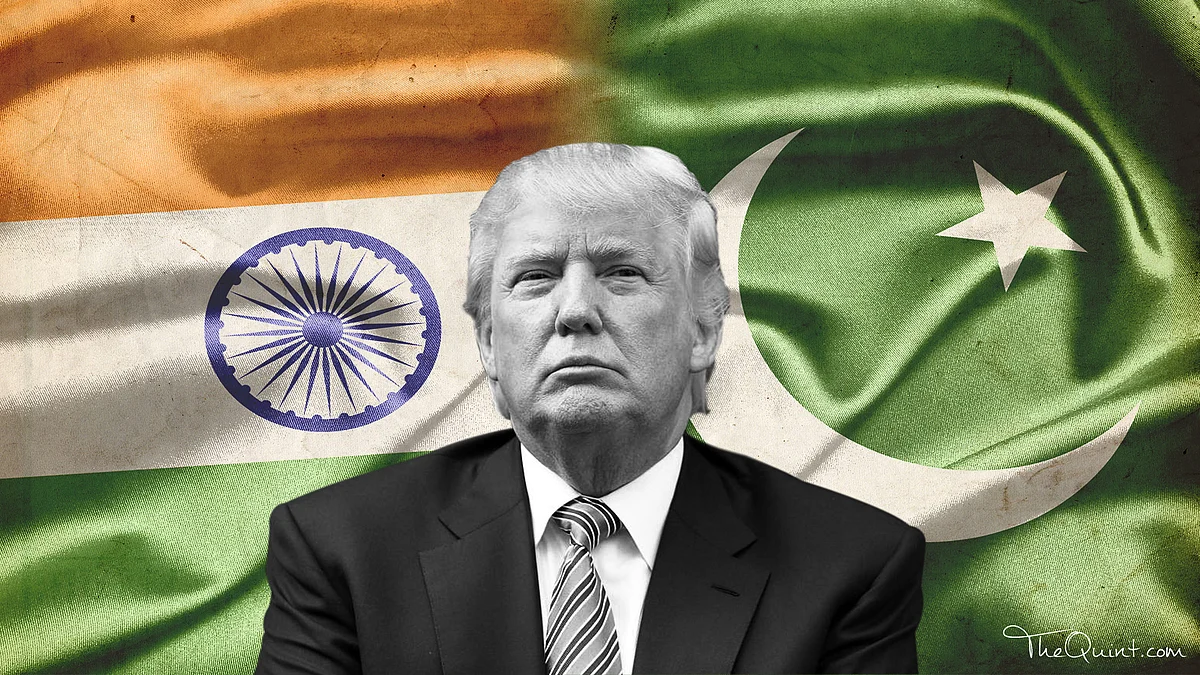

WASHINGTON / NEW DELHI: U.S. President Donald Trump has dismissed Indian Prime Minister Narendra Modi’s denial of U.S. involvement in brokering last month’s ceasefire between India and Pakistan, asserting that American mediation helped prevent a potentially nuclear conflict.
Trump’s comments followed an unprecedented White House meeting on Wednesday with Pakistan’s powerful army chief, Field Marshal Asim Munir, whom Trump praised for helping de-escalate hostilities with India. It marked the first time a U.S. president hosted Pakistan’s military chief without senior civilian officials present.
“I stopped the war between Pakistan and India. This man [Munir] was extremely influential from Pakistan’s side, Modi from India’s side,” Trump told reporters. “Two very smart people decided not to keep going with that war — that could have been a nuclear war.”
Trump said he had spoken to Modi the night before and also expressed interest in a future U.S.-India trade deal. However, India’s Foreign Secretary Vikram Misri quickly rejected Trump’s version of events, saying Modi made it clear in the call that the ceasefire resulted from direct military-level talks between India and Pakistan — with no role played by the U.S.
“India has not accepted and will never accept third-party mediation,” Misri said. “The ceasefire was coordinated directly between the two militaries through established communication channels, and on Pakistan’s request.”
Despite India’s firm stance, Pakistan has publicly thanked Washington for what it describes as a “constructive role” in easing tensions, which erupted after a deadly April 22 attack in Indian-administered Kashmir that killed 26 people. India blamed Pakistan-based militants, a claim Islamabad denies.
The brief but intense conflict saw both nations exchange airstrikes, drones, and artillery fire in what became the most serious escalation in decades between the nuclear-armed neighbors.
During the White House meeting, Pakistan’s military said Munir and Trump discussed trade, digital finance, and the Israel-Iran conflict. Pakistani officials indicated that Munir pressed Trump to avoid U.S. involvement in Israel’s military operations against Iran, warning of the potential for regional destabilization.
Pakistan has strongly condemned recent Israeli airstrikes on Iranian territory, calling them violations of international law. Notably, a section of Pakistan’s embassy in Washington currently represents Iran’s diplomatic interests due to the absence of formal U.S.-Iran relations.
Meanwhile, White House spokesperson Anna Kelly said Trump hosted Munir partly in recognition of the general’s call for Trump to be nominated for a Nobel Peace Prize for “preventing a nuclear war.”
However, regional analysts warned that Trump’s remarks — particularly those implying U.S. mediation — could damage ties with India, where any suggestion of third-party involvement in Kashmir is politically sensitive.
“India-U.S. ties have grown strong in recent years,” said Michael Kugelman of the Asia Pacific Foundation. “But Delhi’s tolerance for U.S.-Pakistan engagement has limits — especially when it touches the Kashmir issue.”
Modi and Trump were scheduled to meet at the G7 Summit in Canada, but Trump left early due to the situation in the Middle East. He reportedly invited Modi to visit the U.S. afterward, but the Indian leader declined due to scheduling constraints.
The White House has not commented on the disagreement between the two leaders’ versions of the ceasefire events.
