

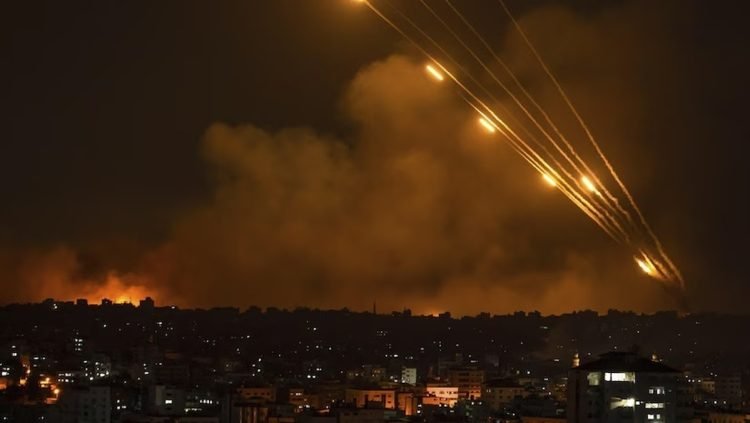

In a dramatic escalation of tensions, Iran’s Islamic Revolutionary Guard Corps (IRGC) launched a new precision-guided missile in an attack on Israel, marking the first use of an advanced domestically developed system. Simultaneously, a sweeping cyberattack—claimed by hacker group Predatory Sparrow—crippled Bank Sepah, a major financial institution tied to the IRGC.
Brigadier General Reza Talaee Nik, spokesperson for Iran’s Defense Ministry, announced on state television that the missile successfully penetrated layers of Israeli air defense systems, including those reinforced by the United States. The missile, used for the first time in active conflict, struck what he described as a “key security and intelligence center” in Israel.
“This operation showcased the superiority of our intelligence and military capability,” said Talaee Nik. “Despite U.S.-backed defense shields, our missile hit its target—proof of the Zionist regime’s deteriorating security.” He emphasized that the missile was indigenously manufactured and impossible to intercept, adding, “Its continued use will gradually erode the enemy’s resilience.”
The Iranian official further asserted that Iran, initially forced into a defensive stance, is now actively deploying its offensive arsenal. He warned of more “surprises” ahead, predicting Israel would not endure a prolonged strategic conflict.
Cyber Strike on Bank Sepah
Just as Iran flaunted its military edge, a digital blow hit home. Hacker collective Predatory Sparrow claimed responsibility for a major cyberattack on Bank Sepah, one of Iran’s oldest and most strategically significant banks—widely considered a financial engine for the IRGC.
The group declared it had “destroyed all data” within the bank’s system, bringing services to a standstill across its 1,800 branches and affecting customers nationwide. In a statement, the hackers accused Bank Sepah of financing Iran’s missile and nuclear programs and acting as a vehicle to bypass international sanctions.
“This is the fate of institutions that bankroll tyranny,” said the group, thanking “brave Iranians” who allegedly aided the operation.
Fars News confirmed the bank’s online platforms were down, with additional ripple effects hitting the gas station network and disrupting payment systems tied to Kosar and Ansar banks—both connected to Iran’s military apparatus.
While Iranian state media acknowledged the outages, they avoided attributing blame, even as public frustration mounted over the broad and sudden system failure.
This dual strike—combining military force with digital warfare—signals a new chapter in the Iran-Israel confrontation, where missiles meet malware in an evolving, multi-front conflict.
