

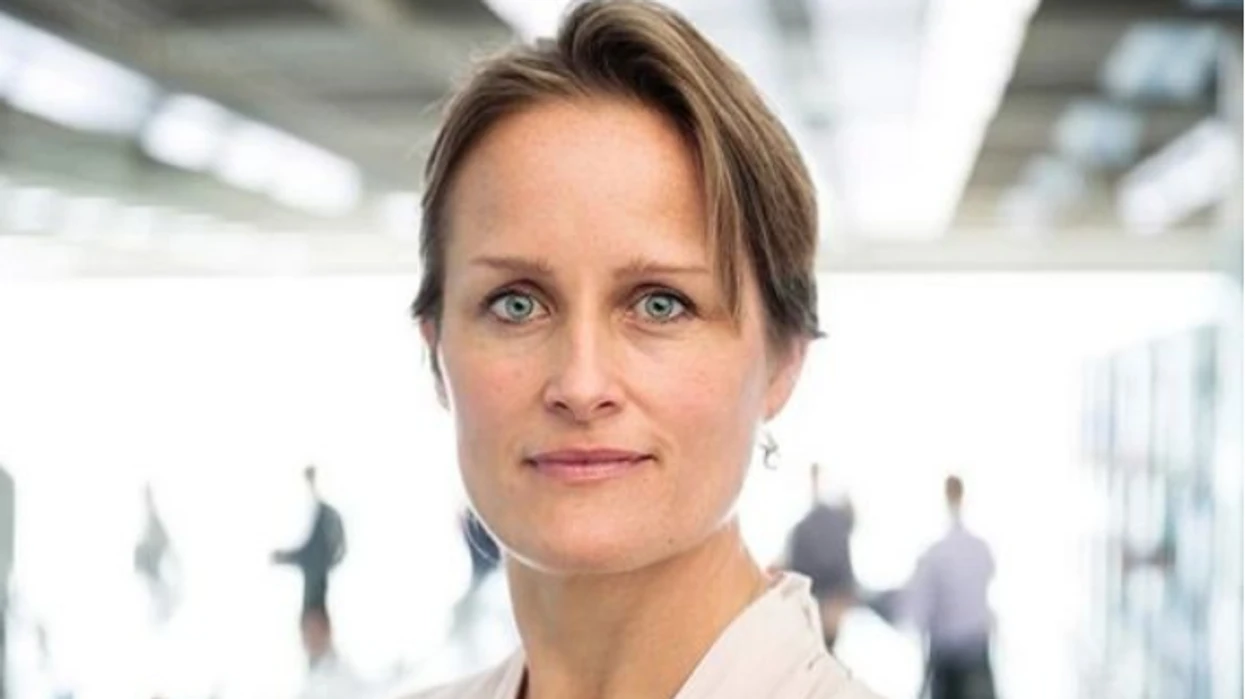

For the first time in its 116-year history, Britain’s foreign intelligence service MI6 will be led by a woman. Prime Minister Keir Starmer has appointed Blaise Metreweli as the agency’s next chief, succeeding Sir Richard Moore in autumn 2025.
Currently serving as MI6’s Director General for Technology and Innovation, Metreweli will become the 18th head of the Secret Intelligence Service. In her new role, she will be referred to by the codename “C”—a tradition reserved for the organisation’s top official and the only publicly named member of the agency.
Often likened to the real-life counterpart of “M” in the James Bond franchise, Metreweli brings a formidable blend of operational and technological expertise to the post. With decades of experience in intelligence operations across the Middle East and Europe, she is widely regarded as one of Britain’s foremost strategic minds in national security.
As MI6 pivots to confront increasingly complex hybrid threats—ranging from cyberattacks to geopolitical sabotage—her background in field operations and emerging technologies is seen as especially vital. British officials continue to identify Russia, China, and Iran as key adversarial threats in this evolving landscape.
A Trailblazing Career
Metreweli began her career in intelligence after studying anthropology at Pembroke College, Cambridge. She joined MI6 in 1999 as a case officer and rose steadily through the ranks, holding a range of senior roles in both MI6 and domestic agency MI5. While at MI5, she operated under the public pseudonym “Director K,” focusing on hostile state counterintelligence.
Her work has spanned frontline intelligence operations and high-level strategic leadership, giving her rare cross-agency experience within the UK’s intelligence apparatus. In recognition of her contributions to foreign policy and security, she was awarded the Companion of the Order of St Michael and St George (CMG) in 2024—a distinction for outstanding service overseas.
Metreweli currently leads MI6’s technology and innovation division, one of the agency’s most strategically critical departments, where she has been instrumental in adapting Britain’s spycraft to meet the demands of the digital age.
Vision for the Future
Metreweli’s recent focus has been on developing cutting-edge systems to shield intelligence officers from detection—particularly against threats like China’s growing biometric surveillance networks. She is known for seamlessly integrating traditional human intelligence with technological innovation to modernize MI6’s operational reach.
In a rare public comment in 2021 during her tenure at MI5, Metreweli warned of the increasingly diverse nature of global threats. “We’re protecting government, protecting secrets, protecting our people—so counter-assassination—protecting our economy and our sensitive technology and critical knowledge,” she told The Telegraph.
As MI6’s next chief, Metreweli is expected to place strong emphasis on enhancing the UK’s cyber defense capabilities, preventing state-sponsored intrusions, and safeguarding critical national technologies. Her appointment is not only historic—it signals a strategic shift in how Britain plans to defend itself in an age where warfare and espionage are increasingly digital, decentralized, and global.
