

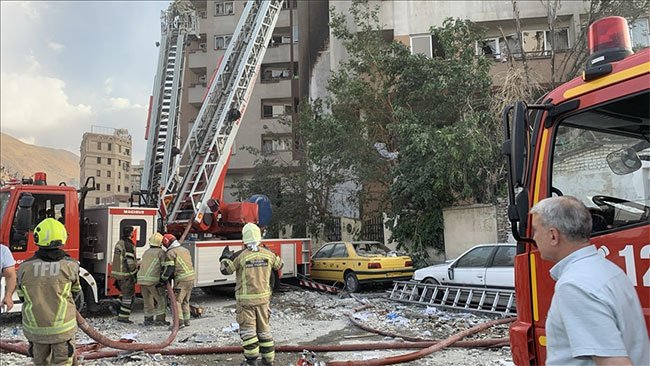

Israel spent years meticulously preparing for its sweeping military operation targeting Iran’s nuclear and missile infrastructure, according to a senior security official who spoke to The Times of Israel. The campaign involved unprecedented covert efforts, including the establishment of a secret drone base within Iran, the smuggling of advanced weaponry, and the deployment of Mossad commandos—all coordinated through close collaboration between the Israel Defense Forces (IDF) and the Mossad intelligence agency.
According to the official, Mossad agents successfully constructed a drone launch site near Tehran. These drones were activated in a surprise strike that took out surface-to-surface missile launchers positioned to target Israel.
In parallel, Israeli operatives smuggled vehicles containing precision weapons systems into Iranian territory. These systems were used to disable Iran’s air defense infrastructure, clearing the way for Israeli aircraft to operate freely in Iranian airspace.
A third covert component involved Mossad special forces placing precision-guided missiles close to anti-aircraft installations in central Iran. These strikes played a key role in neutralizing Iran’s layered air defense system.
“These operations required groundbreaking strategy, daring execution, and precise coordination,” the official said. “It was a surgical use of cutting-edge technology, elite forces, and undercover agents working deep inside Iran—all while staying invisible to Iranian intelligence.”
Meanwhile, the regional fallout from the Israeli strikes is spreading. The U.S. Embassy in Baghdad issued a warning on Thursday advising American citizens to avoid travel to Iraq, following the State Department’s decision to evacuate nonessential personnel from the mission.
Similar precautionary measures were extended to Bahrain and Kuwait, where nonessential embassy staff and their families were authorized to leave voluntarily. However, local conditions remain stable.
In Iraq, foreign energy companies continue to operate without disruption, a senior Iraqi official told Reuters. Bahrain’s national oil company, Bapco Energies, also confirmed its operations remain unaffected, though it is closely monitoring the evolving situation.
Amid rising tensions, armored units from the Iraqi Counter Terrorism Forces have been stationed around the U.S. Embassy in Baghdad’s Green Zone as a precautionary measure.
Contrary to circulating rumors, the U.S. Embassy in Bahrain stated that it has not altered its operational posture, confirming that staffing and embassy activities remain normal.
