

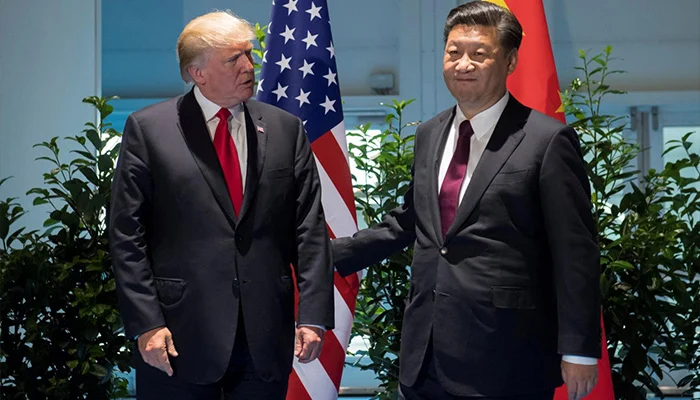

U.S. and Chinese officials announced today that they have reached a preliminary framework to revive stalled trade negotiations, including an agreement to ease Beijing’s export restrictions on rare earth minerals. However, little progress was made toward resolving deeper, long-standing economic tensions between the two countries.
The announcement came after two days of intense talks in London, where U.S. Commerce Secretary Howard Lutnick said the new framework adds “meat on the bones” to the broad understanding reached in Geneva last month, aimed at de-escalating a damaging trade war marked by retaliatory tariffs.
The Geneva agreement had faltered due to China’s continued curbs on exports of critical minerals, prompting Washington to impose new export restrictions of its own — blocking shipments of sensitive items such as semiconductor design software and aircraft to China.
Lutnick said that under the London agreement, the U.S. will lift some of its recent export controls, although he did not provide specifics following the late-night conclusion of talks.
“We’ve reached a framework to implement the Geneva consensus and the call between the two presidents,” Lutnick told reporters. “Next, we’ll each consult our leadership — President Trump and President Xi — for approval. If they sign off, we’ll move forward with implementation.”
China’s Vice Commerce Minister Li Chenggang echoed Lutnick’s comments, confirming that a framework had been agreed upon in principle, subject to final approval from the leaders of both countries.
While the deal may help prevent the Geneva consensus from collapsing under tit-for-tat export controls, it does little to address more fundamental disagreements. These include the Trump administration’s sweeping unilateral tariffs and U.S. complaints about China’s state-directed, export-driven economic policies.
“There’s still a long way to go,” said Josh Lipsky, senior director of the Atlantic Council’s GeoEconomics Center in Washington. “They’ve returned to square one — but that’s a significant improvement over square zero.”
The two sides now face an August 10 deadline to finalize a broader deal. If no agreement is reached by then, previously paused tariffs will be reimposed, with U.S. rates soaring from 30% to 145% and China’s jumping from 10% to 125%.
