

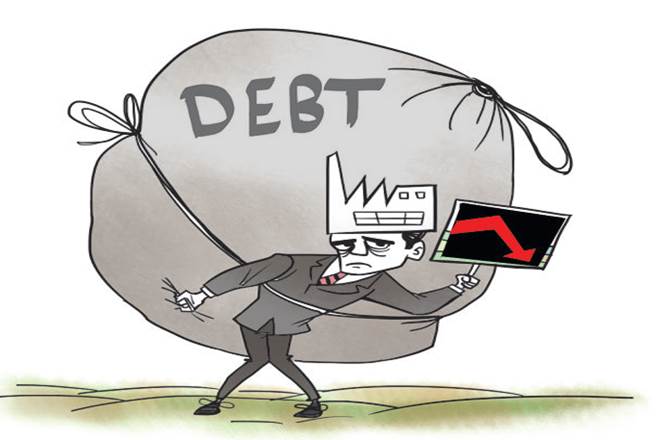

ISLAMABAD: Pakistan’s public debt has reached an unprecedented Rs76.01 trillion ($269 billion) as of March 2025, marking a nearly 4.5-fold increase since 2015 and exposing the country’s chronic fiscal mismanagement and dependency on borrowing.
According to the Pakistan Economic Survey 2024–25, public debt now stands at 66.27% of GDP, exceeding the statutory limit set by the Fiscal Responsibility and Debt Limitation Act (FRDLA) — a worrying sign for a struggling economy with limited fiscal space.
From General Pervez Musharraf’s tenure to the current government, successive administrations have leaned heavily on borrowing. Since 2008, the country’s debt has grown by 994%, and by 337% in the last decade alone. Each Pakistani — including newborns — now effectively carries Rs277,462 in public debt.
Decades of Debt Accumulation
- 2001: Rs3.68 trillion
- 2008 (end of Musharraf era): Rs6.13 trillion
- 2013 (end of PPP govt): Rs14.29 trillion
- 2018 (end of PML-N govt): Rs24.95 trillion
- Mar 2022 (end of PTI govt): Rs44.37 trillion
- Post-PTI period to Mar 2025: Rs31.64 trillion added
Since April 2022, an additional Rs31.64 trillion has been added in just three years — one of the fastest debt surges in Pakistan’s history.
Domestic vs External Debt
- Domestic Debt: Rs51.52 trillion
- External Debt: Rs24.49 trillion ($87.4 billion)
In the first nine months of FY2025, Rs6.44 trillion was spent on interest payments, or 66% of the Rs9.78 trillion annual budget allocation. Most of this — Rs5.78 trillion — went toward domestic debt servicing, while Rs656 billion covered external interest payments.
Strategic Shifts in Borrowing
The government has increasingly shifted toward long-term debt instruments to manage refinancing risks and extend the maturity profile:
- Pakistan Investment Bonds (PIBs): Rose by Rs5.6 trillion
- Government Ijara Sukuk: Increased by Rs1.2 trillion
- Prize Bonds: Minor rise of Rs16 billion
- Permanent Debt: Now 78% of total domestic debt (up from 70%)
In contrast, floating debt, mainly in the form of Market Treasury Bills, dropped from Rs10.25 trillion in June 2024 to Rs7.86 trillion by March 2025 — a reduction of Rs2.4 trillion, reflecting a deliberate move away from short-term borrowing.
Unfunded debt — mostly in the form of National Savings Schemes — edged up slightly by Rs137 billion to Rs2.94 trillion.
External Debt Breakdown
Total external public debt stood at $87.4 billion, with:
- Government Debt: $79.13 billion
- IMF Loans: $8.27 billion (including $4.4B from SBP and $3.9B federal)
- Long-Term Debt: $78.18 billion
- Short-Term Debt: $950 million
Composition of Long-Term External Debt:
- Multilateral Loans: $40.47 billion (51.8%)
- Bilateral (Paris Club): $5.94 billion (7.6%)
- Bilateral (Non-Paris Club): $17.86 billion (22.8%)
- Eurobonds/Sukuk: $6.8 billion (8.7%)
- Commercial Bank Loans: $5.85 billion (7.5%)
- Other Sources: 1.5% (e.g., Naya Pakistan, Pakistan Banao Certificates)
No Eurobonds or international Sukuk were issued during the first nine months of FY2025, reflecting limited market access. At the same time, external repayments totaled $5.64 billion, exceeding gross inflows of $5.07 billion, indicating pressure on the external account.
Key Debt Management Measures
- Introduction of 2-year zero-coupon PIBs, raising Rs610 billion
- Launch of 10-year Ijara Sukuk (fixed and floating) to attract Islamic investors
- Shift from short- to long-term borrowing to lower rollover risks
Conclusion
Despite the Ministry of Finance touting improved debt maturity and better cash-flow planning, Pakistan’s public debt trajectory remains deeply concerning. The economic reliance on debt — amid low revenue collection, limited export growth, and high expenditure — highlights the urgent need for structural fiscal reforms to avoid a deeper crisis.
Unless meaningful policy corrections are made, the burden of debt will continue to crowd out development spending and undermine long-term economic stability.
