

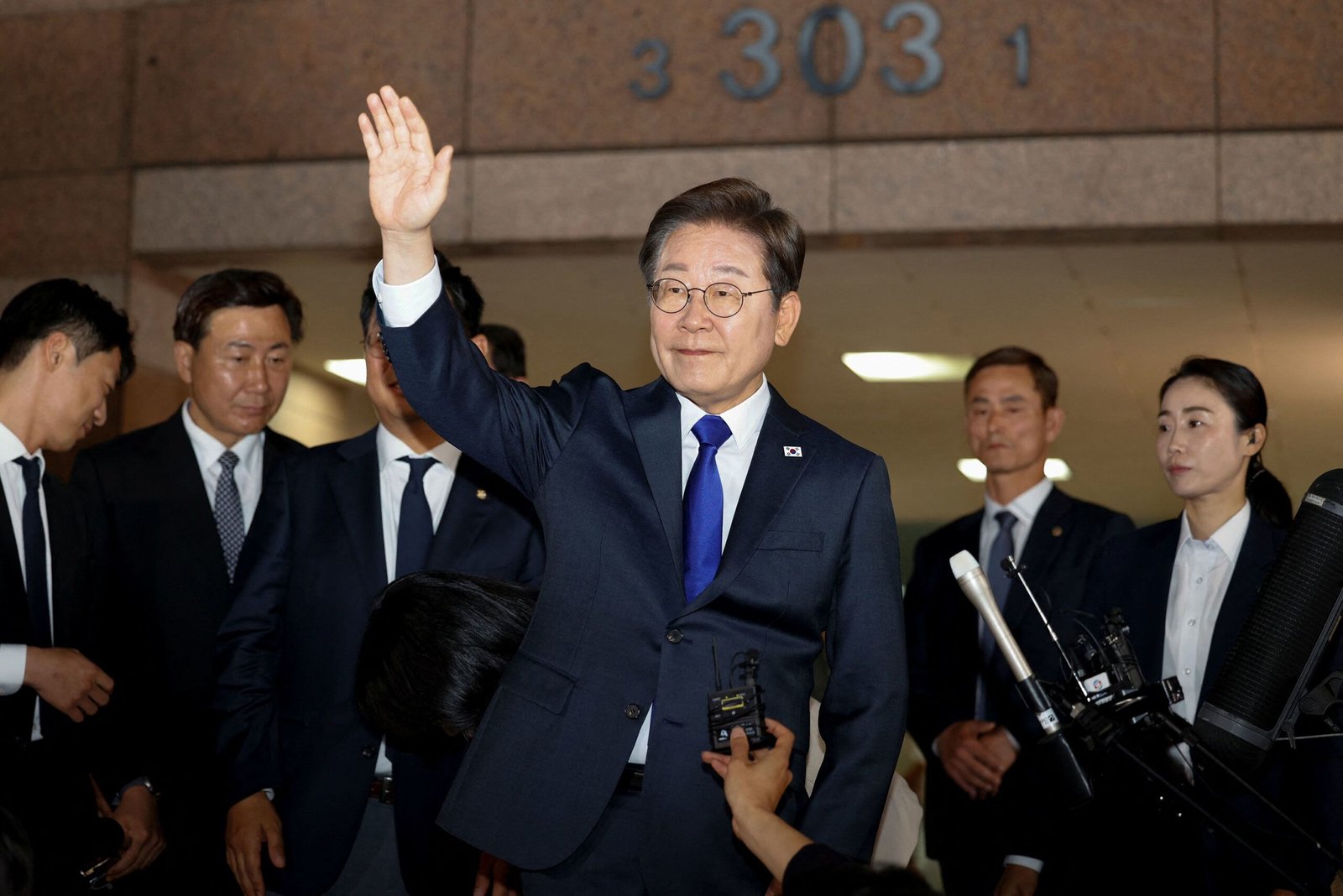

Lee Jae-myung, leader of South Korea’s center-left Democratic Party, has won the presidency following a snap election marked by high voter turnout and political upheaval. The victory comes six months after former president Yoon Suk Yeol’s controversial declaration of martial law plunged the country into crisis.
According to official results from the National Election Commission, Lee defeated conservative candidate Kim Moon-soo, who conceded defeat before the final ballots were counted. Voter turnout reached 79.4%, the highest since 1997, reflecting the intense public engagement in the election seen as a referendum on Yoon’s administration.
Lee addressed the nation, expressing gratitude for the trust placed in him and pledging to fulfill his responsibilities with integrity. He emphasized unity, stating that even those who did not vote for him are “fellow citizens,” and promised to rebuild the country through hope, dialogue, and reconciliation.
The newly elected president is expected to assume office almost immediately, pending the formal validation of results. With over 96% of ballots counted, the margin made it mathematically impossible for Kim to close the gap.
Lee will face significant challenges, including economic instability, demographic decline, and rising tensions with North Korea. He signaled a shift in foreign policy, pledging to pursue open communication with Pyongyang, reversing the hardline approach of the previous administration.
The election followed months of political dysfunction, a series of interim leaders, and a fractured conservative bloc. Kim struggled with party divisions and failed to consolidate the right-wing vote.
Many South Koreans, particularly the youth, expressed relief. “It’s been a tough road,” said 20-year-old activist Noh Min-young. “This feels like the moment we’ve been fighting for.”
Lee’s win marks a pivotal moment in South Korea’s modern political history. Experts see it as a rejection of authoritarian measures and a call for democratic renewal, despite Lee’s own controversial background and past legal troubles.
Security was heightened for the election and inauguration, with police deploying thousands of officers as Lee, who survived a previous assassination attempt, campaigned behind bulletproof shields.
