


Writer S. H. Irtiza Kazmi
KARACHI: The armed conflict between India and Pakistan in May 2025 was not only a test of military might but also a revealing mirror reflecting the dangerous interplay of sensationalist media, Hindu nationalist ideology, and deepening communal divides within India. The Indian media’s irresponsible coverage, combined with Prime Minister Narendra Modi’s aggressive Hindutva narrative, fuelled hatred, disinformation, and regional instability, exposing contradictions between India’s self-image and harsh realities on the ground.
Sensationalism and Fabrications: Indian Media’s Role in Fanning the Flames
Prominent Indian journalists and media personalities such as Arnab Goswami, Major Gaurav Arya, General Bakhshi, Barkha Dutt, Palki Sharma, Rajdeep Sardesai, Sudhir Chaudhary, Rahul Kanwal, Sweta Singh, and Navika Kumar led a chorus of sensationalism during the May 2025 India-Pakistan conflict. Their broadcasts were riddled with exaggerations and outright falsehoods—for instance, claims that Indian forces had destroyed the “Lahore port,” despite Lahore being a landlocked city with no port facilities. News channels aired animated missile strike visuals, fake breaking news about arrests of Pakistani military leaders, and doctored footage from unrelated conflicts such as Gaza and Lebanon. Some anchors celebrated alleged Indian victories with overblown theatrics, including sirens and dramatic graphics, while spreading fabricated stories of coups in Pakistan, the capture of Islamabad, and destruction of Karachi port. This widespread misinformation was not limited to fringe outlets but permeated even traditionally trusted media organizations, contributing to national panic and misinformation. Modi’s Hindutva Wave: Hindu Supremacy and Regional Dominance Dreams At the heart of this media storm lies the dominant political ideology of Narendra Modi, often referred to as the “Butcher of Gujarat” due to his role in the 2002 anti-Muslim riots. Modi’s vision of India is inseparable from the Hindutva doctrine—a belief in Hindu cultural and political supremacy.
This ideology promotes a dream of Indian dominance over its neighbours and beyond, positioning India as a Hindu nation destined to lead the subcontinent. This narrative has sparked widespread hatred against Muslims and other minorities within India, institutionalizing discrimination through laws like the Citizenship Amendment Act (CAA) and the National Register of Citizens (NRC). The media, largely aligned with Modi’s agenda, amplifies this majoritarian worldview, silencing dissent and marginalizing voices that challenge the Hindu nationalist project.
Endorsing the Two-Nations Theory: A Historical Reckoning Modi’s rhetoric and the media’s propagation of Hindu supremacy implicitly endorse the Two-Nations Theory, the ideological foundation that led to the partition of British India and the creation of Pakistan and Bharat (later renamed India). This theory argued that Hindus and Muslims constituted separate nations, incapable of coexisting within a single state. Today, the deepening communal divides, state-sanctioned discrimination, and media-fuelled hatred validate the theory’s continued relevance. The May 2025 conflict and its coverage have underscored the persistent fractures within India, proving that the vision of a unified, secular India remains elusive.
The Stark Reality Behind the Grand Narratives
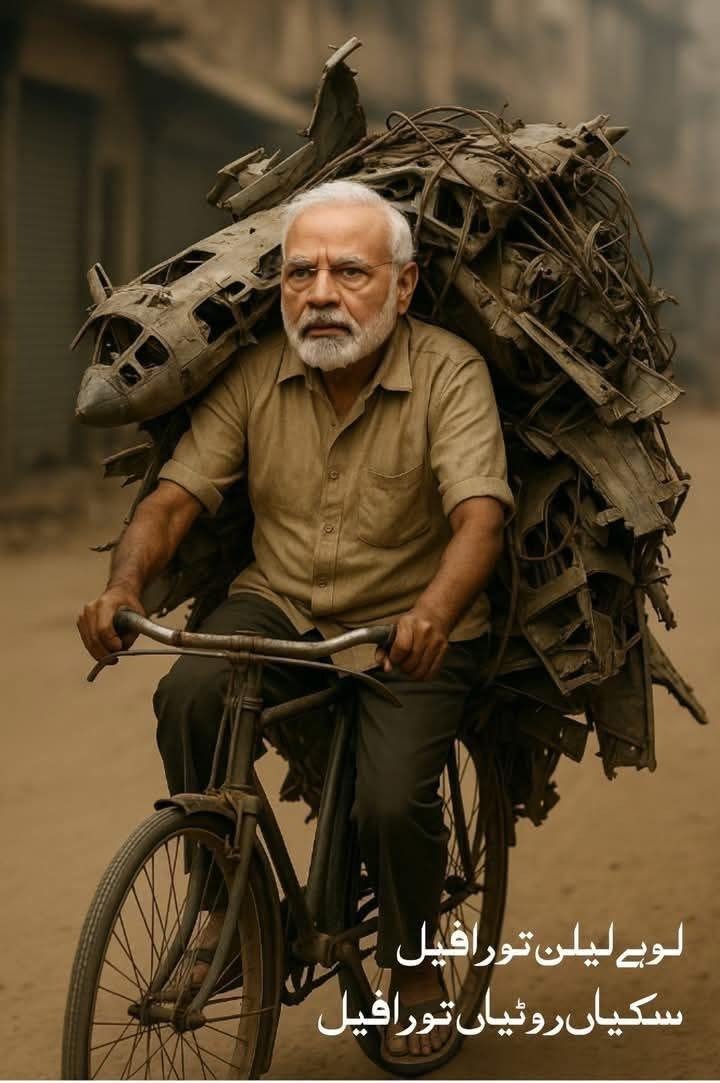
While Indian media and political rhetoric project India as a rising regional power, the everyday reality for many Indians is starkly different. Despite being the world’s fifth-largest economy with over 1.4 billion people, millions lack basic amenities such as proper bathrooms and reliable transportation. Overcrowded trains with passengers traveling on roofs remain common, highlighting disconnect between nationalist pride and ground realities. This contradiction was laid bare during the conflict, as India’s military setbacks and Pakistan’s measured response challenged the grandiose claims of Indian dominance. The media’s failure to acknowledge these realities only deepened public disillusionment and international skepticism.
A Cautionary Tale of Media Ethics and National Identity
The May 2025 India-Pakistan conflict exposed not only geopolitical tensions but also the dangerous consequences of irresponsible media and divisive political ideology. Indian media’s sensationalism, disinformation, and war-mongering rhetoric, fuelled by Modi’s Hindu supremacist narrative, misled the public and deepened communal animosities. For India to emerge as a stable and respected regional power, it must confront these internal contradictions, uphold journalistic ethics, and embrace inclusive nationalism, otherwise, the cycle of hatred and conflict will only continue to undermine peace and progress.
