

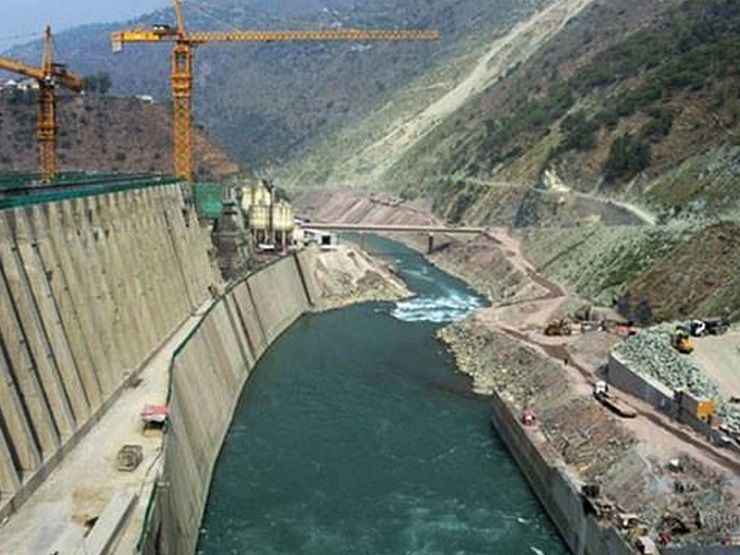

ISLAMABAD: Prime Minister Shehbaz Sharif on Tuesday directed the immediate removal of all obstacles hindering the construction of the Diamer-Bhasha Dam, emphasizing its critical importance for Pakistan’s economic self-reliance and energy security.
Chairing a high-level meeting on national water resources at the Prime Minister’s Office, Shehbaz Sharif said the dam project must be prioritized, calling it vital for ensuring affordable electricity and sustainable agricultural growth.
“Economic stability depends on cheap energy and agricultural productivity—both of which require efficient water management and increased storage capacity,” the Prime Minister stated.
He highlighted the Diamer-Bhasha Dam’s dual role in generating stable, low-cost power and managing water flow to mitigate floods and ensure consistent supply for agriculture. He ordered all administrative, legal, and logistical barriers to be eliminated to fast-track the project’s completion.
The meeting was attended by Federal Ministers Ahsan Iqbal (Planning), Amir Muqam (Kashmir Affairs & GB), Azam Nazir Tarar (Law & Justice), and Moin Wattoo (Water Resources), along with Advisor Rana Sanaullah, Gilgit-Baltistan Chief Minister Gulbar Khan, and senior officials.
Participants agreed that expanding water storage has become an urgent necessity, especially in light of worsening climate change impacts, depleting groundwater levels, and Pakistan’s dependence on agriculture.
According to recent updates from the Water and Power Development Authority (WAPDA), significant progress has been made on the dam, including the successful diversion of the Indus River—an essential step that enables construction of the dam’s main structure.
Reaffirming his commitment, the Prime Minister stressed that projects like Diamer-Bhasha are not optional but essential for Pakistan’s future. “New dams are not just about power generation—they’re about food security, climate resilience, and economic survival,” he said.
Once completed, the Diamer-Bhasha Dam is expected to store 8.1 million acre-feet of water and produce 4,500 megawatts of electricity, offering a major boost to Pakistan’s energy and agricultural sectors.
