


Weaponising Water
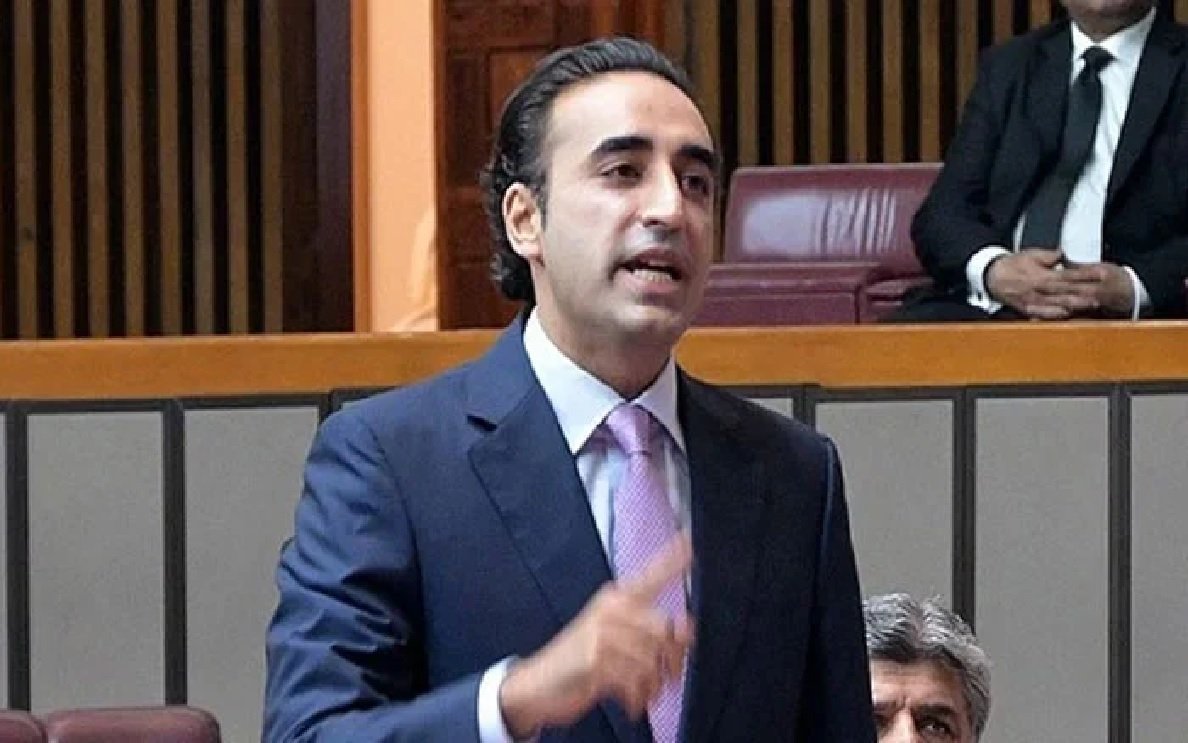
Pakistan People’s Party (PPP) Chairman Bilawal Bhutto Zardari, heading a high-level Pakistani delegation, held critical diplomatic meetings at the United Nations to address the deteriorating security environment in South Asia, particularly in light of India’s recent aggressive posture.
During a key engagement on Monday, Bilawal met with Ambassador Fu Cong, the Permanent Representative of China to the UN, to discuss the regional implications of the April 22 Pahalgam attack and India’s subsequent actions.
Bilawal expressed deep appreciation for China’s consistent and principled support for Pakistan, especially during times of heightened regional tension.
He outlined Pakistan’s efforts to maintain peace and stability despite India’s belligerence, emphasizing Islamabad’s restrained and responsible response to recent provocations. “It is regrettable that India rejected Pakistan’s offer for an independent, impartial, and transparent investigation,” he stated, referring to the Pahalgam incident.
The Pakistani delegation also highlighted India’s escalating hostility, including its arbitrary cross-border attacks, the targeting of civilians, and its alleged support for terrorism within Pakistan.
A major point of concern raised by Bilawal was India’s suspension of the Indus Waters Treaty—a move he described as the “weaponisation of water” and a blatant violation of international norms and treaty obligations.
Both Pakistan and China reaffirmed their shared commitment to the peaceful resolution of disputes through dialogue and multilateral cooperation. They called for strict adherence to the UN Charter, respect for international law, and the preservation of treaty sanctity.
Bilawal reiterated that resolving the Jammu and Kashmir dispute, in accordance with United Nations Security Council resolutions, is vital for ensuring lasting peace in South Asia.
Taking to social media after the talks, Bilawal wrote: “I condemned India’s reckless actions, including its weaponisation of water, and reaffirmed that IIOJK remains an unresolved dispute and a fault line for regional peace. The international community must reject India’s dangerous ‘new normal’ of aggression.”
The Pakistani delegation also met with the Permanent Representative of the Russian Federation to the UN. Bilawal briefed Russian officials on Pakistan’s measured approach and underscored the urgent need for a lasting ceasefire and a peaceful resolution of the Kashmir dispute. He urged Russia to support efforts to uphold a rules-based international order rooted in the UN Charter.
In further engagements, the Pakistani team held detailed discussions with ambassadors of the ten elected members of the UN Security Council (E10). Bilawal reaffirmed Pakistan’s principled stance in the face of India’s provocations, reiterating Islamabad’s commitment to diplomacy, dialogue, and regional peace.
He again raised concerns about India’s alleged weaponisation of water, stressing that this act endangers millions and destabilizes the fragile regional balance.
Bilawal called for renewed global attention to the Kashmir issue, emphasizing that Pakistan condemns terrorism in all its forms but reserves the right to defend its sovereignty and territorial integrity.
“South Asia cannot afford another crisis,” he warned, urging the international community to act before the situation spirals further. The series of meetings marked a concerted diplomatic push by Pakistan to rally international support against what it views as India’s unlawful and dangerous regional behavior.
