

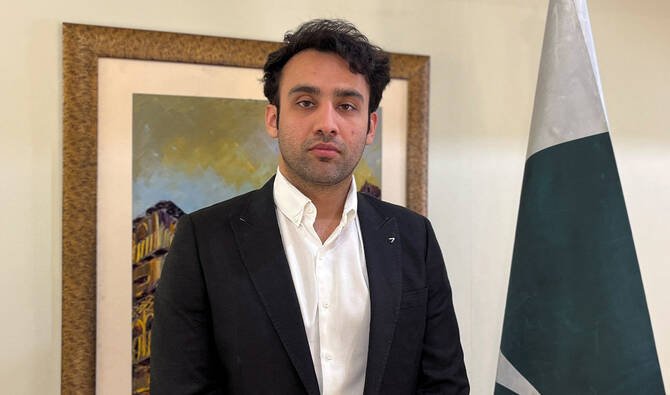

The Special Assistant to the Prime Minister (SAPM) on Blockchain and Crypto, Bilal Bin Saqib, announced that the government is in the process of creating a regulatory framework for digital currencies that aligns with the guidelines set by the Financial Action Task Force (FATF), the global watchdog against money laundering and terrorism financing.
Bilal Bin Saqib, who also serves as CEO of the Pakistan Crypto Council (PCC), explained that the council is working on drafting the framework that will regulate cryptocurrency use in Pakistan. He emphasized the importance of regulation, stating that the absence of oversight poses significant risks.
Highlighting the benefits of crypto, he noted that the global rate of its use in illicit activities is only 0.024%, in contrast to 2% to 4% for cash transactions. He further pointed out that crypto is used far less in money laundering compared to cash and said there is a growing disconnect between policymakers and the technologically adept youth.
Saqib clarified that the government would not be using public funds to purchase bitcoins. Instead, it plans to make use of bitcoins already seized by authorities. These will be placed in a new “Bitcoin National Wallet,” which will also be set up to accept donations from the global community aimed at supporting Pakistan.
He revealed that Bitcoin mining in Pakistan will be pursued through public-private partnerships. The share of bitcoins generated through these operations that belongs to the government will be deposited into the national wallet. According to Saqib, at least six countries have expressed interest in this initiative.
“Our objective is to transform costs into valuable assets,” he said, while citing Bitcoin mining activities currently underway in Ethiopia, Bhutan, and the United States.
He also mentioned that the government will not be investing financially in mining operations but will instead provide electricity to private investors. No fixed price has been established for the electricity to be used in these ventures, and each project will be assessed individually.
Last month, the government announced the allocation of 2,000 megawatts (MW) of electricity in the initial phase of a national initiative to support Bitcoin mining and AI data centers. Finance Minister Muhammad Aurangzeb stated that this effort aims to turn Pakistan’s surplus power capacity into a source of high-value digital assets.
