

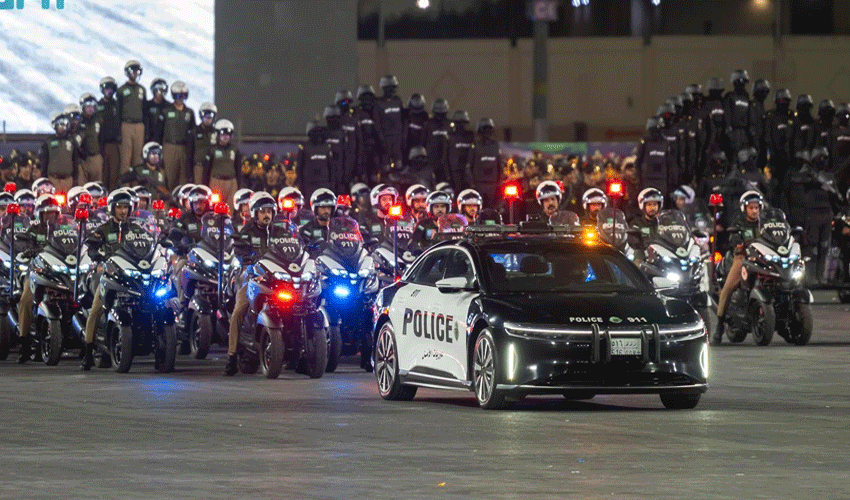

Saudi Arabia has launched an extensive security parade and military exercise in Makkah ahead of the Hajj 2025 pilgrimage, underscoring its commitment to ensuring the safety of millions of worshippers expected to arrive in the Kingdom.
Supervised by Interior Minister Prince Abdulaziz bin Saud, the drills involved coordinated displays by Hajj security forces, featuring ground troops, helicopters, armored vehicles, and specialized tactical units. The annual event aims to demonstrate the operational readiness of security personnel and the strength of the comprehensive safety protocols in place for the pilgrimage.
As part of the parade, elite forces performed precision drills and simulated emergency scenarios—including crowd control, threat neutralization, and rapid medical response—to showcase their preparedness for any potential incidents. Overhead, helicopters provided aerial surveillance, while ground teams demonstrated synchronized responses to simulated threats.
Lt. General Mohammed Al-Bassami, Director of Public Security and Chairman of the Hajj Security Committee, reaffirmed the Kingdom’s commitment to the safety and well-being of pilgrims. “Hajj security is a red line,” he stated. “Our forces are fully prepared to respond swiftly and decisively to any threat. We are here to ensure that the guests of Allah can perform their rituals in peace, safety, and dignity.”
More than 40,000 security personnel will be deployed across key pilgrimage sites, including Makkah, Mina, Arafat, and Muzdalifah. The security plan integrates advanced surveillance systems, crowd management protocols, and real-time emergency response operations to handle the logistical challenges posed by the mass influx of worshippers.
This year’s security strategy also incorporates cutting-edge technologies such as drones, facial recognition, and smart monitoring systems to detect and respond to any suspicious activity. These tools will support on-ground personnel in maintaining order and facilitating smooth movement throughout the pilgrimage.
Authorities have also intensified coordination between various ministries and departments—including health, civil defence, and transport—to streamline services and ensure a seamless experience for pilgrims. With the first groups of international pilgrims already arriving, preparations are entering their final phase ahead of the Hajj, expected to begin in mid-June.
The annual security parade not only serves as a symbol of national readiness but also underscores Saudi Arabia’s long-standing responsibility as the custodian of Islam’s holiest sites.
