

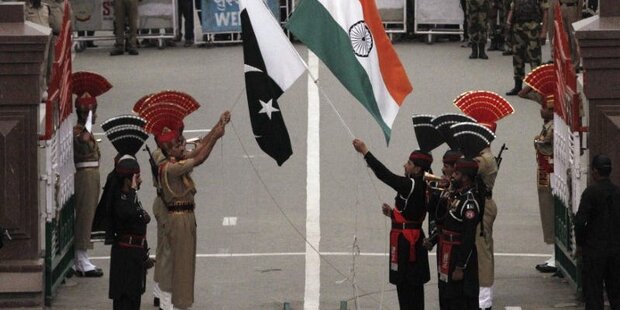

ISLAMABAD: Pakistan and India are nearing a return to the troop levels that existed before their latest round of hostilities earlier this month, according to Chairman Joint Chiefs of Staff Committee (CJCSC) General Sahir Shamshad.
General Shamshad confirmed that both countries are scaling back military deployments along their shared border following the most intense clashes in decades.
The recent flare-up, which saw the use of fighter jets, drones, missiles, and artillery over four days, ended with a ceasefire but raised alarms globally due to the nuclear capabilities of both nations.
The trigger for the violence was a deadly attack on April 22 in Indian-administered Kashmir that left 26 people dead, mostly tourists. New Delhi swiftly blamed Pakistan-based militants, an accusation Islamabad firmly rejected.
“We’ve almost returned to the pre-April 22 situation — if not fully, then we’re very close to it,” said General Shamshad, who spoke from Singapore where he is attending the Shangri-La Dialogue, a major regional security forum.
Although nuclear weapons were not brought into play during the crisis, Shamshad warned of the ever-present risk of miscalculation. “Nothing escalated to that level this time, but strategic missteps can’t be ruled out. When tensions rise, reactions are unpredictable,” he said.
He expressed particular concern that the latest conflict extended beyond the disputed Kashmir region, marking a shift in how future escalations could unfold. “This has lowered the threshold of conflict between two nuclear-armed neighbors. Next time, it may not be confined to Kashmir. It could involve the entirety of both countries,” he cautioned. “That’s an extremely dangerous precedent.”
Behind-the-scenes diplomacy, especially U.S. mediation, played a pivotal role in defusing the crisis, Reuters reported. Shamshad acknowledged this, noting that future conflicts may not leave enough time for global intervention.
“The window for the international community to act will shrink. Significant damage may already occur before diplomacy can take effect,” he warned.
While reiterating Pakistan’s openness to dialogue, General Shamshad said communication channels between Islamabad and New Delhi remain limited. Aside from a crisis hotline between the two nations’ military operations directors and a few tactical border hotlines, there is no sustained contact or negotiation framework.
He also clarified that there are currently no backchannel talks underway and said he has no plans to meet with his Indian counterpart, General Anil Chauhan, who is also attending the Singapore forum.
The general’s remarks underscore the fragility of peace in South Asia and the urgent need for robust, long-term mechanisms to prevent future conflicts between the two nuclear neighbors.
