

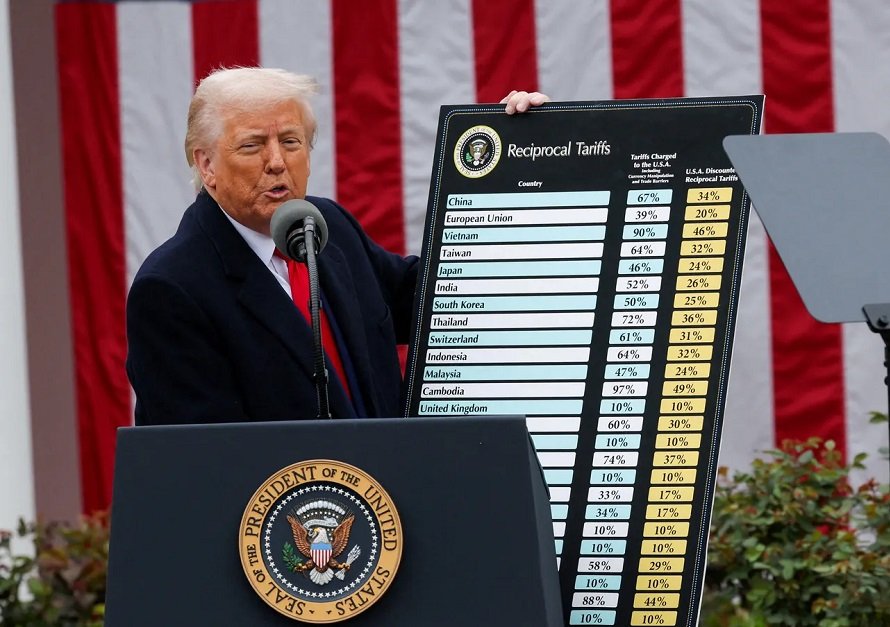

A U.S. trade court has struck down former President Donald Trump’s proposed “Liberation Day” tariffs, ruling that the administration overstepped legal bounds by attempting to impose sweeping import duties on countries with trade surpluses over the United States.
The decision, issued by the Court of International Trade in Manhattan, emphasized that under the U.S. Constitution, the power to regulate international commerce rests solely with Congress—a power not overridden by presidential emergency authorities.
“The court does not assess whether the President’s use of tariffs is wise or effective,” a three-judge panel stated on Wednesday. “Rather, it is impermissible because the statute does not grant such authority.”
The Trump administration immediately responded by filing a notice of appeal, indicating it would challenge the court’s ruling.
The decision stemmed from two lawsuits: one brought by the Liberty Justice Center on behalf of five small U.S. businesses that import products from countries affected by the tariffs, and another filed by 13 states. The plaintiffs argued the proposed tariffs would inflict serious financial harm, limiting their ability to operate effectively.
The affected businesses include a New York-based wine and spirits importer and a Virginia company that produces educational kits and musical instruments. All claim that the across-the-board tariffs would disrupt supply chains and raise costs.
In addition to these cases, at least five more legal challenges against the tariffs are currently in progress.
In response to the ruling, Stephen Miller, a former White House deputy chief of staff and senior Trump adviser, criticized the court on social media, writing: “The judicial coup is out of control.”
