


BISP Budget
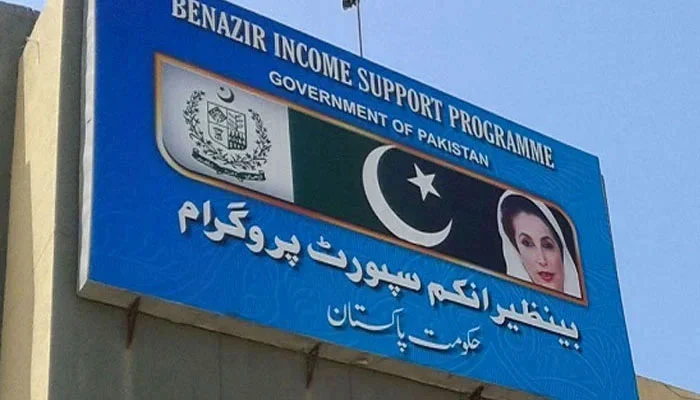
ISLAMABAD: The Ministry of Finance has proposed a substantial increase in the budget allocation for the Benazir Income Support Programme (BISP) for the upcoming fiscal year, raising it by 20% to Rs716 billion from the current Rs592.48 billion.
This significant financial boost reflects the government’s deepening commitment to expanding its social safety net and protecting vulnerable populations amid economic challenges.
According to senior officials, this increased allocation comes despite broader fiscal pressures and negotiations underway for the federal budget. The new funding is expected to support crucial enhancements to the Unconditional Cash Transfer (UCT) Kafaalat programme, a core component of BISP.
In line with commitments made to the International Monetary Fund (IMF), the government plans to raise the quarterly Kafaalat benefit from Rs13,500 to Rs14,500 starting January 2026. This adjustment is designed to cushion the impact of projected inflation in 2025 and maintain the purchasing power of low-income households.
With the new allocation, BISP will continue supporting its current beneficiary base of 10 million households. The Finance Ministry has reaffirmed its pledge to the IMF to implement annual inflation-linked increases to UCT payments and adjust transfers according to updated household surveys. These adjustments are meant to ensure that support remains in line with the consumption needs of the bottom 15% of Pakistan’s population.
Additionally, BISP is working closely with the World Bank to strengthen its Conditional Cash Transfer (CCT) initiatives, focusing on health, nutrition, and education. The FY26 budget will preserve spending on these programmes as a stable share of GDP, with efforts ongoing to avoid duplication between federal and provincial schemes.
From July to February of FY25, BISP disbursed Rs347 billion — a notable 82.6% increase over the same period in the previous year. Meanwhile, structural reforms are being implemented to improve administrative efficiency across government, including the rationalisation of over 43 ministries and 400 departments.
Efforts are also underway to modernise energy subsidies by targeting the bottom 40% of the population and replacing traditional consumption-based subsidies with income-based mechanisms.
The Power Ministry and BISP are collaborating with the World Bank to create a new framework to identify electricity consumers by income and streamline transfer mechanisms.
BISP is further enhancing its administrative system, including efforts to maintain a live National Socio-Economic Registry (NSER), keep enrollment open year-round, and conduct status revalidation of beneficiaries on a three-year cycle. The programme is also piloting a new electronic payment system in select districts, which will give beneficiaries access to bank accounts and promote financial inclusion through savings.
In terms of education and health-linked initiatives, BISP exceeded its FY25 education CCT enrollment target of 10.4 million by 400,000 and is on track to meet its nutrition CCT goal of 2.1 million beneficiaries, further demonstrating the programme’s reach and growing impact.
