

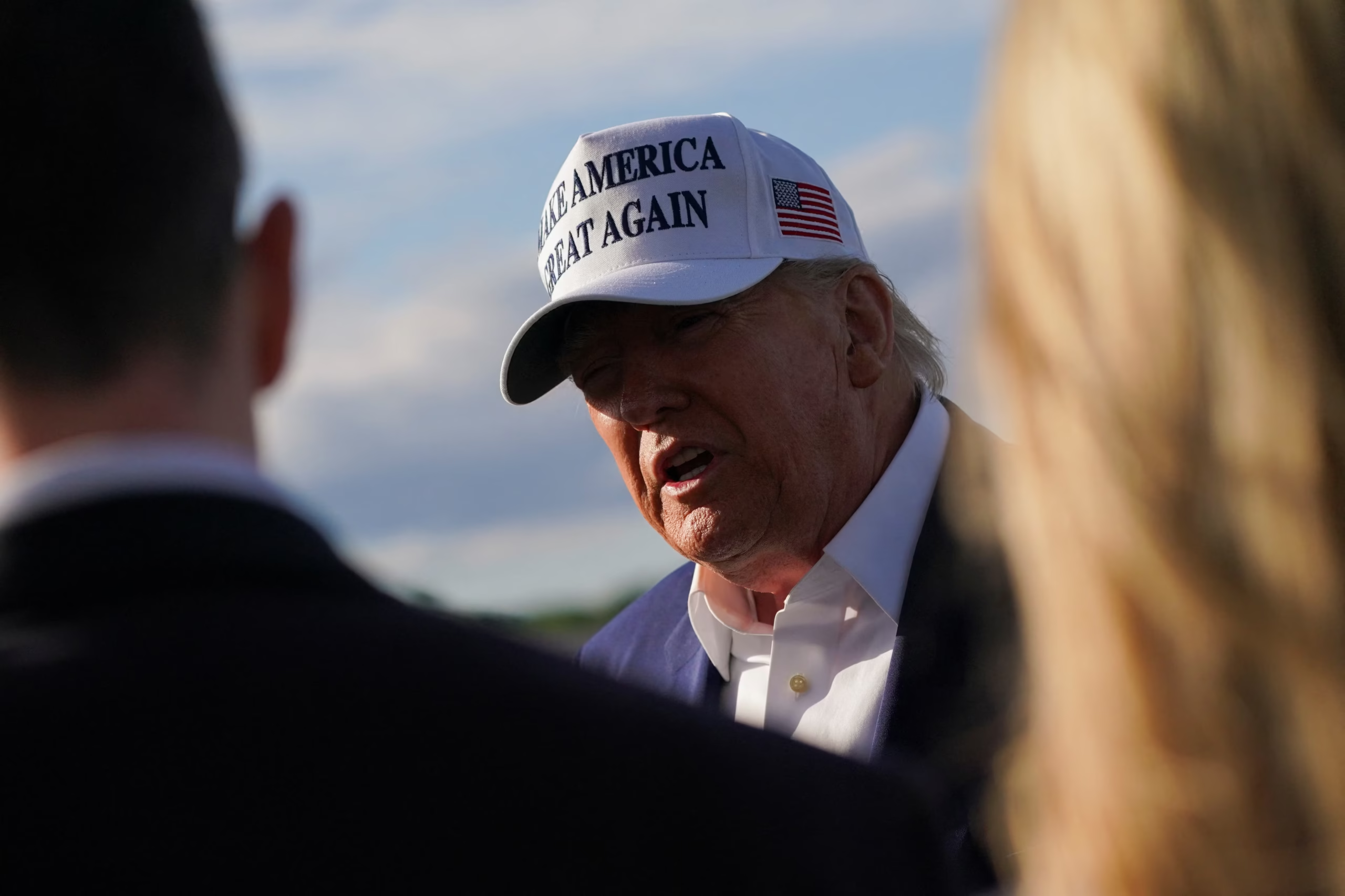

Trump
United States President Donald Trump on Sunday doubled down on his administration’s industrial policy shift, emphasizing a renewed focus on manufacturing high-value goods such as military equipment and advanced technologies over traditional sectors like textiles and apparel.
Speaking to reporters before departing from New Jersey aboard Air Force One, President Trump echoed recent comments made by Treasury Secretary Scott Bessent, who had dismissed the need for a “booming textile industry” in today’s U.S. economy. The remarks sparked criticism from the National Council of Textile Organizations, which accused the administration of overlooking a critical domestic sector.
But President Trump stood firm, stating, “We’re not looking to make sneakers and T-shirts. We want to make military equipment. We want to make big things. We want to do the AI thing.” He continued, “I’m not looking to make socks. We can do that very well in other locations. We are looking to do chips and computers and lots of other things — and tanks and ships.”
Trump’s comments reflect his longstanding economic nationalism and industrial strategy, which prioritize strategic manufacturing sectors tied to national security, such as semiconductors, defense systems, and artificial intelligence. However, the apparel industry voiced concern over the implications of this approach.
The American Apparel & Footwear Association (AAFA) swiftly responded, highlighting the disproportionate burden tariffs place on the sector. “With 97% of the clothes and shoes we wear being imported — and with this industry already facing the highest tariffs in the U.S. — more duties will only raise input costs and hurt low-income American families,” said AAFA President Steve Lamar.
Since taking office in 2017, Trump has made protectionist trade policies a hallmark of his economic agenda. In recent days, he escalated tensions with the European Union by proposing a 50% tariff on EU imports starting June 1 — a move that rattled international markets. However, he later extended the deadline to July 9 to allow time for negotiations with the 27-member bloc.
Trump also threatened a 25% import tax on Apple’s iPhones, signaling his administration’s willingness to target major corporations if it serves broader trade and industrial goals.
Positioning himself as a defender of American industry, President Trump has consistently framed his policies as a response to decades of offshoring and deindustrialization.
While his supporters argue that tariffs and trade restrictions have revitalized select sectors, critics contend that such measures have raised costs across the board — especially in industries dependent on complex, global supply chains.
With the 2024 election behind him and a second term underway, Trump appears poised to double down on his “America First” agenda — one in which tanks, chips, and ships take precedence over T-shirts and socks.
