


Diplomatic Tour
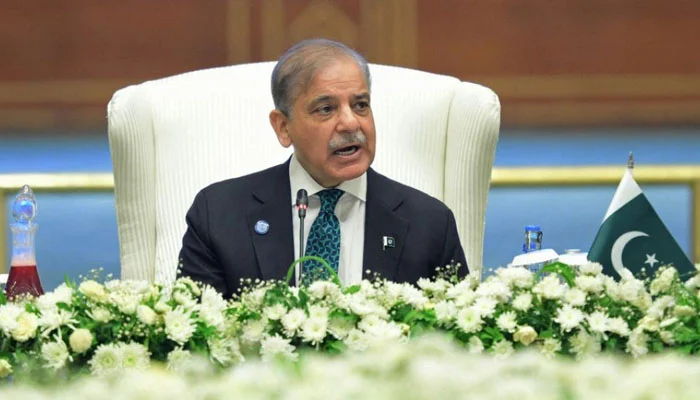
Prime Minister Shehbaz Sharif is set to embark on a diplomatic tour from May 25 to May 30, during which he will visit four friendly nations — Turkiye, Iran, Azerbaijan, and Tajikistan — to express Pakistan’s appreciation for the support these countries extended during the recent military conflict with India.
The announcement came through an official statement issued by the Foreign Office, which detailed that the prime minister’s tour will focus on strengthening bilateral relations, engaging in strategic dialogue, and discussing pressing regional and international issues with the leadership of the host nations.
This outreach marks an important step in Pakistan’s post-conflict diplomacy and seeks to enhance mutual cooperation on a range of political, economic, and security matters.
In a significant component of the visit, Prime Minister Shehbaz Sharif will participate in the International Conference on Glaciers, scheduled to be held in Dushanbe, Tajikistan, from May 29 to 30. The conference will bring together global leaders and climate experts to deliberate on the impact of glacial melt and environmental change, a topic of growing urgency for the region.
Earlier in the day, the prime minister met with Pakistan Peoples Party (PPP) Chairman Bilawal Bhutto Zardari. During the meeting, the premier entrusted Bhutto with leading a high-level Pakistani delegation tasked with presenting Pakistan’s perspective to the international community following the recent conflict.
The delegation, which includes key parliamentarians and diplomatic officials, is expected to visit several global capitals to counter India’s narrative and highlight the facts from Pakistan’s viewpoint.
Prime Minister Shehbaz expressed confidence in Bilawal’s leadership, stating, “I hope that under your guidance, this delegation will present Pakistan’s position and narrative to the world in a comprehensive and effective manner.”
The backdrop to this diplomatic initiative is the large-scale military conflict between Pakistan and India earlier in May. Pakistan launched Operation Bunyan-um-Marsoos in retaliation for what it described as Indian aggression along the Line of Control (LoC) and within Pakistani territory.
The operation, aimed at Indian military installations, resulted in the downing of six Indian fighter jets — including three Rafale aircraft — and several surveillance drones.
The hostilities concluded after 87 hours of intense combat with a ceasefire agreement brokered by the United States. According to the Inter-Services Public Relations (ISPR), 53 Pakistanis, including 13 armed forces personnel and 40 civilians, were martyred during the conflict.
The clash was initially triggered by a deadly attack in Indian Illegally Occupied Jammu and Kashmir (IIOJK), where 26 tourists were killed. India immediately blamed Pakistan for the incident, despite offering no conclusive evidence. Pakistan has since rejected the allegations and is now actively engaging in international diplomacy to present its case.
