

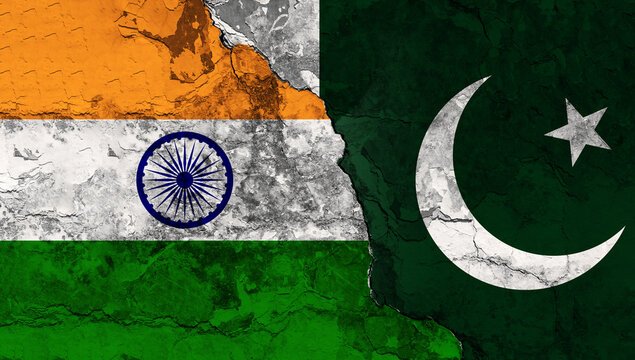

Prolonged Conflict
During the recent but intense military escalation between Pakistan and India, a consensus has emerged among respected global and regional analysts: India had significantly more to lose than Pakistan in the event of a prolonged conflict.
A combination of Indian economists, former members of India’s National Security Council, American financial intelligence agencies, and international risk consultancy experts voiced serious concerns over the economic impact of sustained hostilities on India.
Indian financial media reported that within the first 48 hours of the conflict, investors in the country lost nearly $83 billion, equivalent to PKR 23.5 trillion. This sharp loss dealt a heavy blow to India’s $4.19 trillion economy, which is underpinned by robust exports totaling $821 billion and a substantial Foreign Direct Investment (FDI) stock of $514 billion. The rapid erosion of investor confidence was seen as a signal of the country’s heightened vulnerability in any drawn-out confrontation.
Standard & Poor’s (S&P), the leading American credit rating agency, also warned that an extended military conflict would significantly diminish India’s appeal to foreign investors. With many multinationals looking to India as a strategic alternative to China, particularly amid the ongoing US-China trade tensions, any instability could jeopardize these investment flows and derail long-term economic plans.
Bloomberg News underscored these risks in a comprehensive report, stating: “Militarily both countries have the ability to inflict untold damage, but in economic terms, India increasingly has much more at stake.”
Citing World Bank figures, Bloomberg noted that India’s GDP is now over eight times larger than Pakistan’s—a disparity that has only widened since the early 2000s. With India positioning itself as a key global supply chain hub, especially in attracting tech giants like Apple, the stakes are high.
Furthermore, Bloomberg highlighted recent economic diplomacy efforts by New Delhi, such as a new trade agreement with the UK and ongoing negotiations with the Trump administration aimed at reducing tariffs. These achievements could be overshadowed by a worsening security environment, Bloomberg warned.
Indian security expert Bhashyam Kasturi, a former director of India’s National Security Council Secretariat, echoed this concern, stating bluntly: “India has more to lose.”
Bloomberg also quoted Indian economist Abhishek Gupta, who said: “Any escalation on the border with Pakistan that spirals out of control could dent investor confidence and shift political focus away from crucial economic reforms.”
Pramit Pal Chaudhari, head of the South Asia practice at the New York-based Eurasia Group, added that although Pakistan is economically weaker and less globally relevant, its ability to disrupt India’s economic momentum should not be underestimated. “For India, this adds to the risk premium and chips away at its image as a stable, investment-friendly destination,” he explained.
The consensus is clear: in a protracted conflict, India’s broader economic ambitions and its image as an emerging global powerhouse stand to suffer more deeply than Pakistan’s, regardless of military outcomes.
