

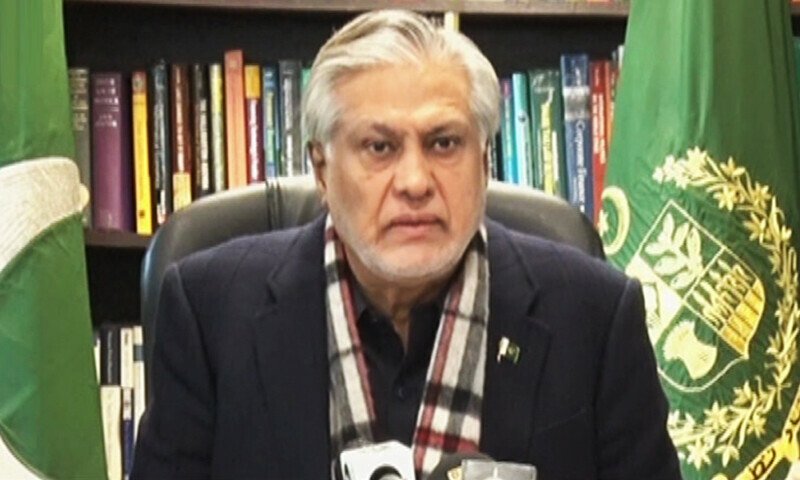

Deputy Prime Minister and Foreign Minister Ishaq Dar, alongside DG ISPR Lt. Gen. Ahmed Sharif Chaudhry, strongly condemned India’s hostile rhetoric in the aftermath of the Pahalgam attack, reiterating Pakistan’s commitment to peace while warning that provocations would be met with a firm response.
In a press conference held on Wednesday, Dar dismissed allegations linking Pakistan to the recent attack in Indian Illegally Occupied Jammu and Kashmir (IIOJK), calling them baseless and part of a familiar Indian disinformation campaign.
“Pakistan condemns terrorism in all its forms and manifestations. No cause can ever justify the killing of innocent people,” Dar stated. “This is not only our national stance but a fundamental Islamic principle. The Quran says that killing one innocent soul is akin to killing all of humanity.”
Dar expressed deep sympathy over the loss of lives in the Pahalgam incident and reiterated Pakistan’s solidarity with victims of terrorism worldwide.
“As a nation that has lost over 80,000 lives and suffered economic damage exceeding $150 billion due to terrorism, no one understands this pain more than Pakistan,” he said. “It is both unjust and absurd to suggest our involvement.”
UN Engagement and Global Outreach
Dar highlighted Pakistan’s active engagement with the United Nations and the global community following the attack.
“As a member of the UN Security Council, we constructively participated in discussions around the Council’s statement condemning the incident. At the same time, India continues to glorify targeted killings and sponsors cross-border terrorism in Pakistan and beyond,” he said.
He added that the Foreign Office has been in contact with numerous international leaders since April 22 to explain Pakistan’s position and expose what he described as a “calculated disinformation campaign” by India.
‘India’s Familiar Playbook’
Dar accused New Delhi of using the same narrative template seen during previous incidents—most notably the Pulwama attack in 2019—where Pakistan was blamed without evidence.
“India’s pattern is clear. Each time it faces internal unrest or diplomatic scrutiny, it fabricates external threats to stir nationalism and distract global attention—especially from the deteriorating situation in IIOJK,” he asserted.
He further pointed out that such incidents often coincide with major diplomatic events or foreign visits to India, suggesting an effort to manipulate international narratives.
Focus on Internal Problems
Dar advised India to shift its focus inward rather than pointing fingers abroad.
“A durable solution for India lies in addressing its own internal divisions, rising extremism, and persistent human rights violations—particularly in IIOJK,” he said. “India’s unilateral actions on August 5, 2019, remain in blatant violation of UN Security Council resolutions and international law.”
The Deputy PM called on the international community to recognize the core issue driving instability in South Asia: the unresolved Kashmir dispute.
“Peace in the region is not possible without a just resolution to the Jammu and Kashmir conflict,” he concluded. “While Pakistan will continue to pursue peace, it will never compromise on national security. Any aggression will be met with a decisive and appropriate response.”
