

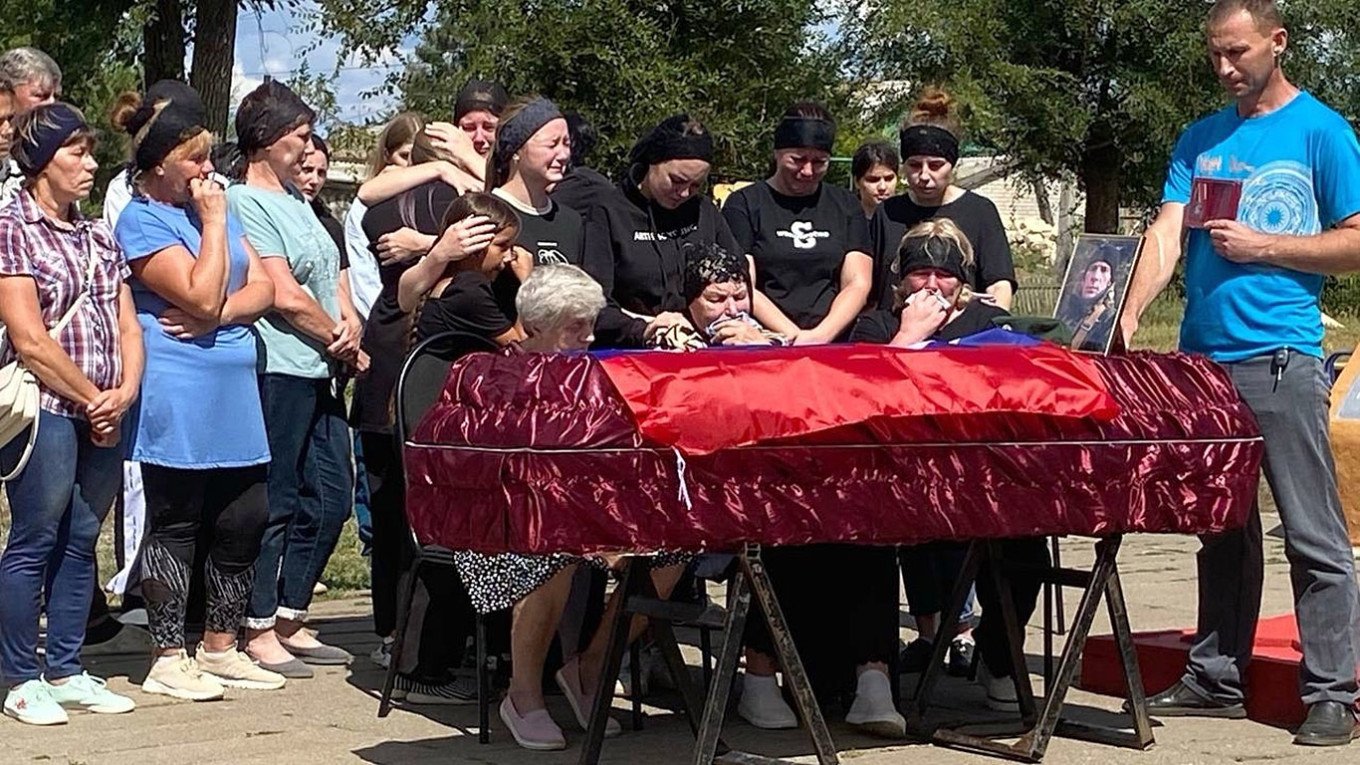

Volunteers monitoring Russian casualties in the Ukraine war have consistently reported that ethnic minorities are suffering the heaviest losses. While much of the attention has focused on Indigenous groups such as the Buryats and Tyvans, non-Indigenous communities are also seeing disproportionate casualties — including over 1,000 ethnic Germans.
These ethnic Germans, often referred to as Volga Germans, trace their roots to settlers invited by Catherine the Great in the 18th century. She sought their agricultural and commercial expertise to modernize the Russian Empire. However, their history has been one of upheaval: forced assimilation and conscription during the tsarist era, brief cultural autonomy in the early Soviet period, and brutal deportations to Siberia and Kazakhstan during World War II.
Andrej Triller, a descendant of deported Volga Germans now living in Germany, is documenting a fresh tragedy — the growing number of ethnic Germans killed while fighting for Russia in Ukraine. Out of the estimated 195,000 ethnic Germans still living in Russia, he has tracked over 1,017 war fatalities.
Triller explained that his efforts stem from a lifelong commitment to his community. He has been active in advocating for Russian German rights since 1991, including efforts to restore the short-lived Volga German Republic. He views the Ukraine war as another blow to a dwindling diaspora now being used in a conflict against Europe.
Historically, Soviet Germans were excluded from combat and instead sent to labor camps during World War II — a policy seen as unjust by many. Ironically, today, ethnic Germans are being drafted and deployed to the frontlines, where their losses are mounting at a staggering rate. Triller noted that while Bashkortostan has the highest number of casualties in sheer numbers (over 4,500), the proportion of losses among ethnic Germans is even more striking given their small population.
He attributes this to the absence of a designated German region in Russia, which means ethnic Germans are scattered across the country and cannot benefit from the quota-based military conscription system that applies to regions. His casualty list reflects this dispersion, with names appearing from areas such as Altai, Omsk, Krasnoyarsk, Kemerovo, Perm, Chelyabinsk, and Sverdlovsk — all places where ethnic Germans were previously exiled or sent to labor camps.
In a tragic twist of history, many Germans who were deported from Ukraine in the past are now being sent back to Ukraine — this time to capture territory for Moscow.
Triller has shared his findings with Russian German community forums, but not everyone welcomes them. He recalls being told his data was “fake” — only to point out a specific case from Saratov, urging skeptics to verify it themselves.
Some community members worry that sharing casualty data could demoralize potential soldiers, but Triller insists that’s precisely the point. He wants to prevent more deaths. If someone avoids going to war because of his list, he considers it a life saved.
He’s particularly concerned that the plight of Russian Germans is largely ignored in media coverage. While ethnic groups like the Buryats and Kalmyks receive some attention and recognition for being sent into battle involuntarily, ethnic Germans, who lack a territorial base or autonomy, are overlooked entirely. As a result, there’s little room for resistance or international solidarity.
To provoke awareness, Triller recently shared a social media post with a striking title: “Merkel, Merz, and Fabritius Died in Ukraine.” While it may appear to reference prominent German politicians, it was in fact about Russian Germans bearing the same surnames who lost their lives in the war — a stark reminder of the overlooked human cost in this community.
