

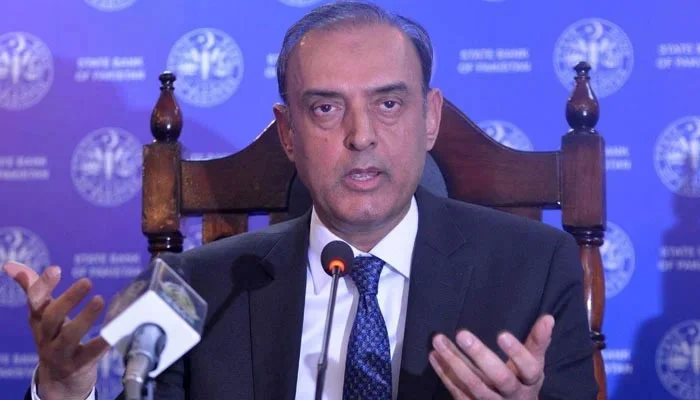

KARACHI: State Bank of Pakistan (SBP) Governor Jameel Ahmad announced on Monday that Pakistan faces external payment obligations of $26 billion, out of which $16 billion are expected to be rolled over or refinanced. Of the remaining $10 billion, $8 billion have already been repaid, he said.
Speaking at the launch ceremony of Pakistan Literacy Week, Ahmad addressed the country’s broader economic situation, including monetary policy, economic recovery, and the promotion of financial literacy.
Economic Recovery and Policy Response
Reflecting on the country’s financial struggles over the past few years, Ahmad noted that in 2022, Pakistan was hit by soaring inflation, a sharp drop in foreign exchange reserves—down to the equivalent of just two weeks of imports—and a massive 50% depreciation in the exchange rate. During that period, the gap between the interbank and open market currency rates widened drastically.
In response, the SBP implemented a range of tough measures, including strict import restrictions and significant interest rate hikes.
“These steps helped stabilise the economy,” he said. “Inflation dropped to as low as 0.7% in March 2025, although we anticipate it will rise again in the coming months.”
Current Account Turns Surplus
The governor shared that the country’s current account, which had long been in deficit, has now moved into surplus territory due to these corrective policies. He added that the exchange rate had also stabilised and the difference between interbank and open market rates had narrowed significantly.
Economic Outlook and Growth Projections
Regarding Pakistan’s growth prospects, Ahmad projected GDP growth for the fiscal year 2024–25 (FY25) to fall between 2.5% and 3.5%. However, if the agriculture sector shows strong performance, growth could potentially rise to 4.2%.
He also revealed that the country’s foreign exchange reserves were likely to exceed $14 billion by June 2025. The current account is expected to post a notable surplus for the fiscal year, a significant improvement from the $1.7 billion deficit recorded last year.
Financial Inclusion and Literacy
Ahmad also reiterated the SBP’s commitment to boosting financial inclusion, stating that the central bank aims to raise the financial inclusion rate from the current 64% to 75% by 2028. Emphasizing the importance of public awareness, he announced a series of events and programs planned throughout Literacy Week to promote financial knowledge across the country.
“I trust my team up to 98%,” he remarked with confidence, expressing optimism about the central bank’s ability to steer the economy towards sustainable recovery.
Ahmad’s comments come at a crucial time as Pakistan continues to navigate external financial pressures while attempting to solidify its recent economic gains.
