

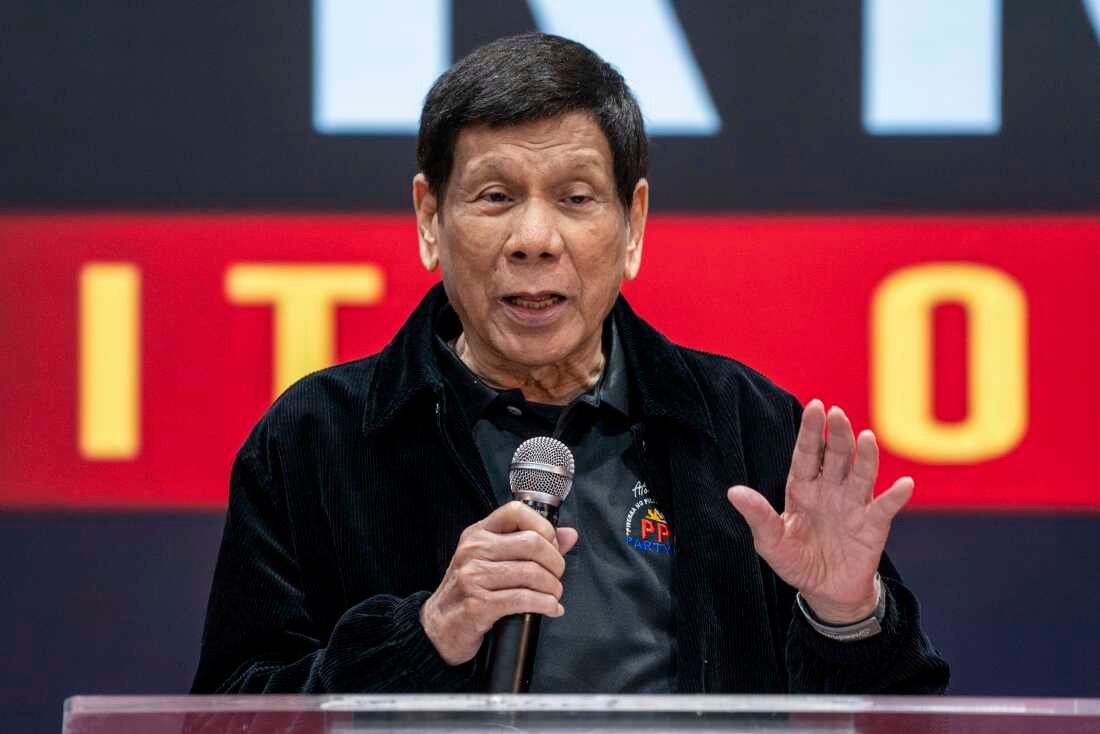

Rodrigo Duterte
Former Philippine President Rodrigo Duterte has been arrested on a warrant issued by the International Criminal Court (ICC), which is investigating allegations of crimes against humanity linked to his controversial war on drugs. Duterte was taken into custody on Tuesday upon his arrival at Manila airport from Hong Kong.
According to a statement issued by the Philippine government, the arrest followed an official request from the ICC, relayed via Interpol, the international police organization. The prosecutor general served Duterte with the ICC notification for an arrest warrant upon his arrival, and he was immediately placed in custody.
The charges against Duterte stem from the violent anti-drug campaign he led during his presidency from 2016 to 2022. The complaint alleges that thousands of people, including minors, were killed in extrajudicial operations, with many victims being denied due process under the law.
According to official police records, over 7,000 people were killed during these operations, though human rights organizations claim the actual number exceeds 30,000. Many of these deaths were linked to unidentified gunmen, some of whom were later identified as police officers.
Human Rights Watch (HRW) welcomed Duterte’s arrest, calling it a crucial step toward accountability. HRW’s deputy Asia director, Bryony Lau, stated that the arrest brings victims and their families closer to justice and reinforces the principle that no one is above the law. She urged the Philippine government, led by President Ferdinand Marcos Jr., to cooperate fully with the ICC and surrender Duterte for trial.
Duterte, however, questioned the legality of his arrest. In a video uploaded to social media by his daughter, Veronica Duterte, the former president demanded an explanation for his detention. He expressed frustration over the circumstances, stating that he had not voluntarily surrendered but had been taken into custody without a clear legal basis.
Days before his arrest, while speaking at an event in Hong Kong, Duterte had defended his presidency, claiming that all his actions were done for the welfare of the Filipino people.
The ICC initiated its preliminary examination into Duterte’s anti-drug campaign in 2018. Although the Philippines formally withdrew from the ICC in 2019, the court continued its investigation, arguing that it retains jurisdiction over crimes committed while the country was still a member.
Duterte’s presidency was marked by a hardline approach to drug-related crimes, with frequent public statements inciting police officers to shoot suspected drug offenders or provoke violent encounters to justify deadly force. His administration dismissed the deaths of innocent people, including children, as collateral damage.
The ICC’s probe also extends to Duterte’s tenure as mayor of Davao City, where he served for over two decades before assuming the presidency. Allegations have surfaced that death squads operated in the city, targeting individuals suspected of drug-related activities or other crimes.
The ICC’s investigation focuses on incidents that occurred between 2016 and 2019, during which Duterte was in power and before the Philippines’ withdrawal from the Rome Statute took effect.
Duterte had been openly hostile toward the ICC, even threatening to arrest former ICC prosecutor Fatou Bensouda if she attempted to conduct an official investigation in the Philippines. His administration repeatedly dismissed the court’s legitimacy, but the investigation continued under Bensouda’s successor, Karim Khan.
Despite Manila’s withdrawal from the Rome Statute, which established the ICC in 2002, the court maintains jurisdiction over crimes committed before the withdrawal took effect.
The arrest of Duterte marks a significant moment in the fight for justice for victims of extrajudicial killings in the Philippines. While his legal team is expected to challenge the arrest, human rights groups view it as a long-overdue step toward holding Duterte accountable for the widespread human rights violations that occurred under his leadership.
The international community will closely monitor how the Marcos administration responds to the ICC’s demand for Duterte’s transfer to The Hague, where he could stand trial for crimes against humanity.
