

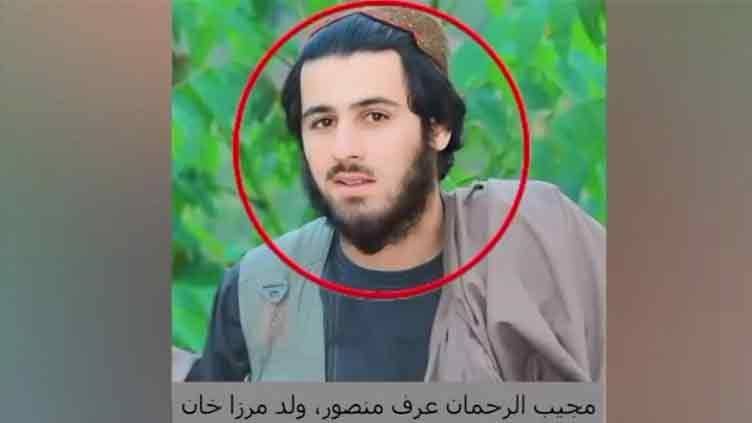

Afghan Terrorist Leader
ISLAMABAD: Security sources have confirmed the identity of an Afghan militant killed during a counterterrorism operation in Pakistan, revealing his active involvement in terrorist activities. The development underscores the growing security concerns in the region, particularly in light of repeated cross-border militant incursions.
According to security officials, on February 28, Pakistani forces carried out a successful operation in Ghulam Khan Kalay, targeting a group of militants.
The operation resulted in the elimination of 14 insurgents, among whom was an Afghan militant identified as Mujeebur Rehman, also known by his alias Mansoor. Mujeeb, the son of Mirza Khan, hailed from Dandar village in Maidan Wardak province, Afghanistan.
Sources revealed that Mujeeb was not an ordinary foot soldier but held a significant rank as a commander of the third battalion at Afghanistan’s National Military Academy. His presence in Pakistan and his subsequent elimination have raised further concerns regarding the movement of Afghan militants into Pakistani territory.
This incident is not an isolated one. Just weeks earlier, on January 30, Pakistani security forces had neutralized another Afghan militant, Badruddin, during an operation in Dera Ismail Khan.
Badruddin, the son of Maulvi Ghulam Muhammad, was a lieutenant in the Afghan army. Additionally, he was the son of the deputy governor of Bagdhis province, making his involvement in militant activities particularly alarming.
These operations are part of Pakistan’s broader counterterrorism strategy aimed at eliminating threats posed by militants who continue to infiltrate the country from Afghanistan.
Islamabad has repeatedly urged the Afghan Taliban-led administration to ensure that Afghan soil is not used as a launching ground for terrorist attacks against Pakistan. However, the Taliban government has consistently denied these allegations.
Pakistan and Afghanistan share a porous border of approximately 2,500 kilometers, with numerous crossing points that play a crucial role in regional trade and people-to-people connections.
However, the border has also become a significant security concern, with terrorist groups exploiting it for their operations. Pakistani security forces have intensified their efforts to curb infiltration attempts, conducting targeted operations and eliminating a growing number of militants.
Despite these efforts, terrorism remains a pressing challenge for Pakistan. Authorities have particularly voiced concerns over groups like Tehreek-e-Taliban Pakistan (TTP), which has been responsible for numerous deadly attacks inside Pakistan. Islamabad has consistently called on Kabul to take decisive action against the TTP and prevent its activities within Afghan territory.
These concerns have been further substantiated by an analytical report submitted to the United Nations Security Council (UNSC) by the Analytical Support and Sanctions Monitoring Team.
The report highlighted the close ties between the Afghan Taliban-led administration and the TTP, revealing that Kabul has allegedly provided logistical, operational, and financial support to the group.
With security forces continuing their crackdown on terrorism, the evolving situation in the region underscores the urgent need for diplomatic efforts alongside military action. The onus remains on Afghanistan’s leadership to address these security threats and ensure that its territory is not used to destabilize Pakistan.
