

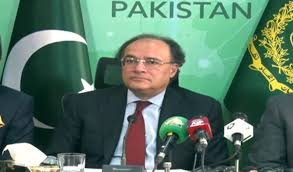

PESHAWAR: Finance Minister Muhammad Aurangzeb announced on Wednesday that the government plans to shut down additional departments as part of an ongoing “rightsizing” initiative aimed at reducing state expenditure.
Speaking to the business community in Peshawar, Aurangzeb explained that the government was actively working to decrease public sector spending by closing more ministries and attached departments. This initiative is driven by the International Monetary Fund (IMF) as part of efforts to improve efficiency and reduce costs within the government.
As part of the rightsizing program, the federal government has already abolished several ministries and their attached departments to streamline operations. In January, Aurangzeb revealed plans to downsize 42 ministries and their 400 associated departments by June 30 of the current fiscal year, with the rightsizing committee aiming to reduce 80 institutions by half.
The government has also eliminated 150,000 vacant positions—60% of which were unfilled regular posts—and categorized them as “dying posts,” significantly impacting the public sector’s financial burden.
Recently, the Ministry of Aviation was dissolved and merged with the Ministry of Defence, saving the government an estimated Rs145 million annually.
Addressing the Peshawar Chamber of Commerce, Aurangzeb emphasized the government’s role in formulating and continuing policies for economic stability. He also highlighted the positive outcomes of the government’s economic measures and assured continued support for businesses across all provinces. The government is consulting with the business community for the upcoming budget to ensure its alignment with their needs.
On the topic of tax collection, Aurangzeb stated that the government is reducing human intervention in the Federal Board of Revenue (FBR) by integrating modern technology, such as artificial intelligence, to minimize corruption and leakage. He noted that the tax policy has been removed from the FBR and placed under the Ministry of Finance, a move aimed at improving efficiency.
To meet IMF requirements, the government in February separated tax policy from the tax collection body and established the Tax Policy Office (TPO), which will be overseen by the finance minister. This office will handle tax policy analysis, data modeling, revenue forecasting, and international tax agreements. The transition of the policy wing from FBR to the Ministry of Finance will take a few months, with full implementation expected by the 2025-26 fiscal year.
In a separate meeting, Finance Minister Aurangzeb met with Muzzammil Aslam, Adviser on Finance to the Khyber Pakhtunkhwa Chief Minister, to discuss fiscal matters. Aurangzeb congratulated the KP government on its implementation of the National Fiscal Pact and Agricultural Income Tax. He assured the provincial government that concerns regarding the National Finance Commission (NFC) Award would be reviewed, emphasizing the government’s intent to collaborate with all provinces.
Aslam raised concerns about the cessation of funds for merged districts under the Accelerated Implementation Programme (AIP) and Annual Development Programme (ADP), stating that while Rs66 billion was allocated for merged districts in the current budget, their expenditures had reached nearly Rs104 billion. He called for interim solutions through the NFC Award to address the funding shortfall and urged early consultations on budget matters, tax enforcement, and salary and pension issues.
