

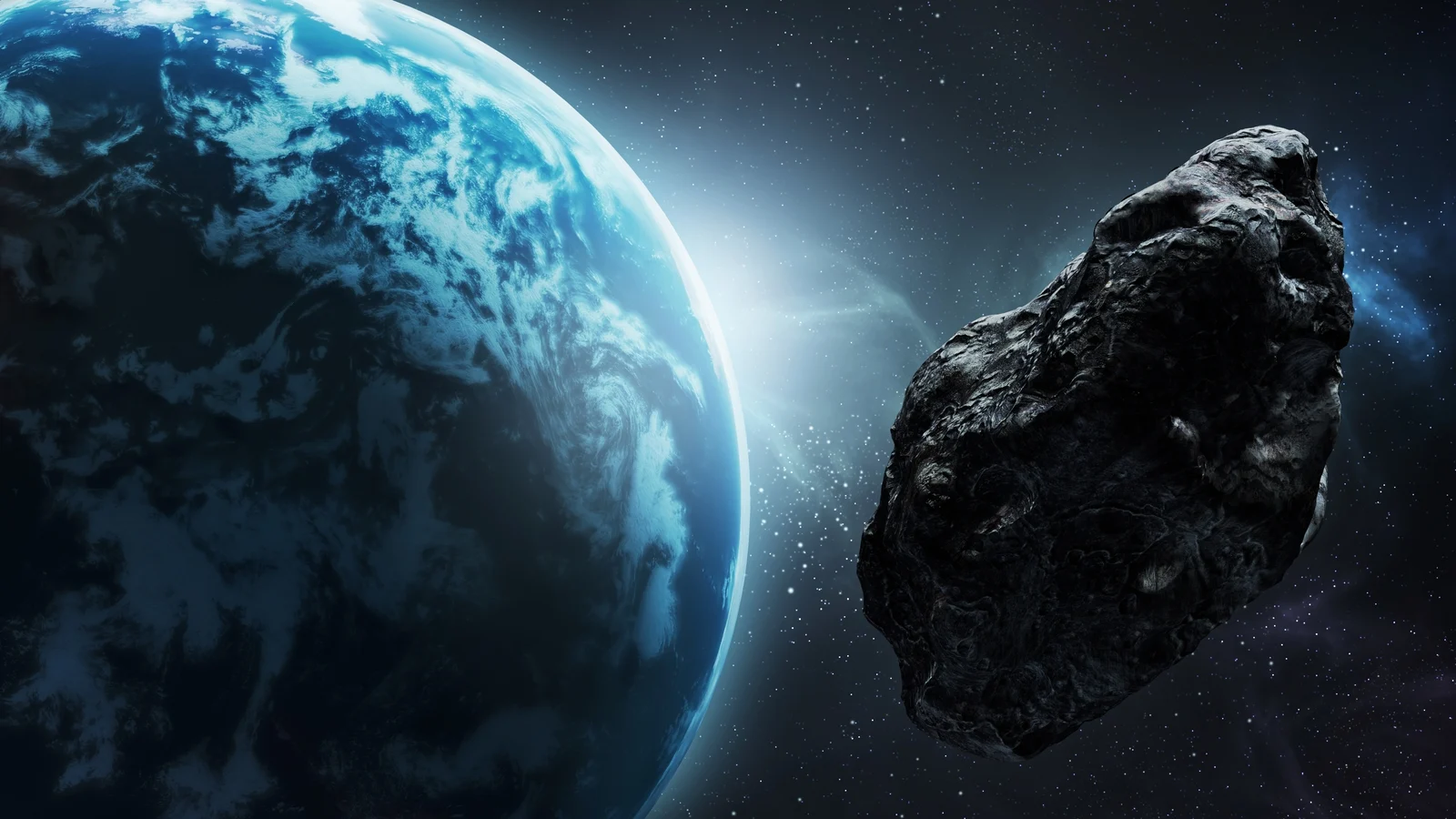

ISLAMABAD: The likelihood of a football field-sized asteroid striking Earth in 2032 has plummeted to just 0.001%, the European Space Agency (ESA) announced on Tuesday.
Last week, the asteroid—named 2024 YR4—set a record for the highest probability of impact, with NASA estimating a 3.1% chance and ESA reporting 2.8%. The planetary defense community had been closely monitoring its trajectory.
However, as anticipated, new observations from telescopes worldwide have narrowed the asteroid’s potential impact zone, significantly reducing the odds of a collision. ESA confirmed that the threat level on the Torino Impact Hazard Scale had now dropped to zero, after briefly reaching level three out of ten last week.
Asteroid’s Size and Potential Impact
Discovered in December, 2024 YR4 measures between 40 to 90 meters (130 to 300 feet) in width, large enough to devastate an urban area. The projected impact date was December 22, 2032, but with the revised calculations, it is now highly likely the asteroid will simply pass by Earth.
Future Monitoring and Planetary Defense
Despite the diminishing threat, the James Webb Space Telescope will continue observing the asteroid in the coming months, ESA confirmed.
Scientists emphasized that even if an asteroid were on a collision course with Earth, humanity now has the means to respond. In 2022, NASA’s DART mission successfully altered the trajectory of a harmless asteroid by crashing a spacecraft into it—a milestone in planetary defense.
Richard Moissl, head of ESA’s planetary defense office, described tracking and eliminating the asteroid’s threat as “a very exciting and educational exercise.” He praised the early detection but noted that there is room for improvement.
New Telescopes to Enhance Detection
Moissl highlighted that upcoming telescopes—including Vera Rubin and Flyeye, both nearing operational status—will enhance asteroid detection speed. He also pointed to Europe’s planned NEOMIR early-warning mission as a key advancement in planetary defense.
The last asteroid of similar size to pose a comparable threat was Apophis in 2004, which initially had a 2.7% chance of striking Earth in 2029—a risk that was later ruled out through additional observations.
