

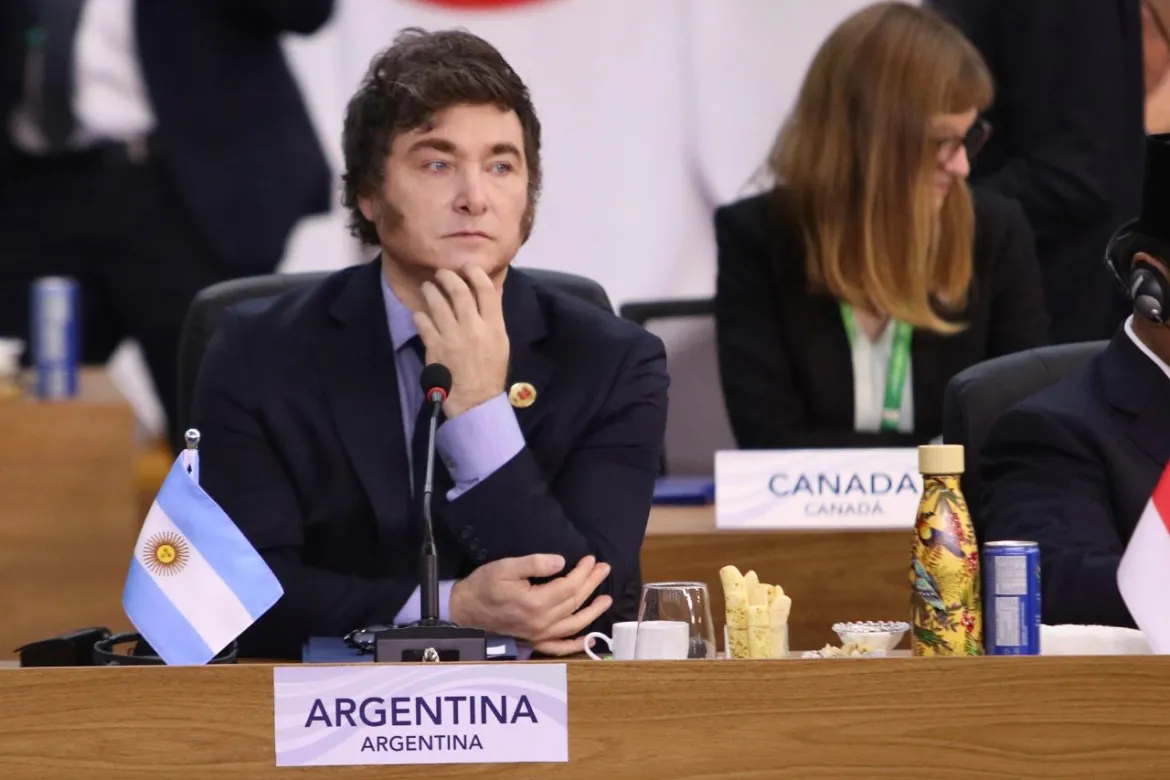

ISLAMABAD: Argentina’s President, Javier Milei, admitted to an error on Saturday after promoting the cryptocurrency $LIBRA, which initially surged in value before experiencing a dramatic crash.
The incident sparked widespread criticism and prompted an official investigation. On Friday, Milei had praised the project on social media platform X, calling it a “private initiative” to boost Argentina’s economy by supporting small businesses. His post included the cryptocurrency’s name and a website link.
Following his endorsement, $LIBRA’s value skyrocketed, only to collapse shortly after. Realizing the implications, Milei deleted the post and stated that he had not been fully aware of the project’s details. He later clarified that he had “no connection” with the company behind it.
Economists, crypto analysts, and opposition figures quickly condemned Milei’s involvement, warning that the digital asset could be a scam or Ponzi scheme. Industry experts labeled the event a “rug pull,” where developers lure investors before abruptly cashing out.
According to The Kobeissi Letter, a market analysis firm, large holders liquidated millions of dollars worth of $LIBRA within minutes as its market value peaked at $4.6 billion. Shortly afterward, the coin’s price plummeted.
In response, the Argentine presidency launched an urgent investigation. The administration announced that the Anti-Corruption Office would assess whether any misconduct occurred, either by Milei or his government. A task force has also been set up to examine the cryptocurrency’s launch and those involved.
Computer scientist Javier Smaldone, known for exposing financial scams, described the situation as a “global fraud,” revealing that profits from the scheme had reached approximately $107 million.
Political backlash followed swiftly. Former president and opposition leader Cristina Kirchner accused Milei of being a “crypto-scammer,” while Civic Coalition member Maximiliano Ferraro called for a special parliamentary inquiry to assign responsibility.
Meanwhile, Milei’s personal lawyer, Francisco Onato, defended him, arguing that his endorsement was merely an attempt to stimulate the economy and did not constitute wrongdoing.
