

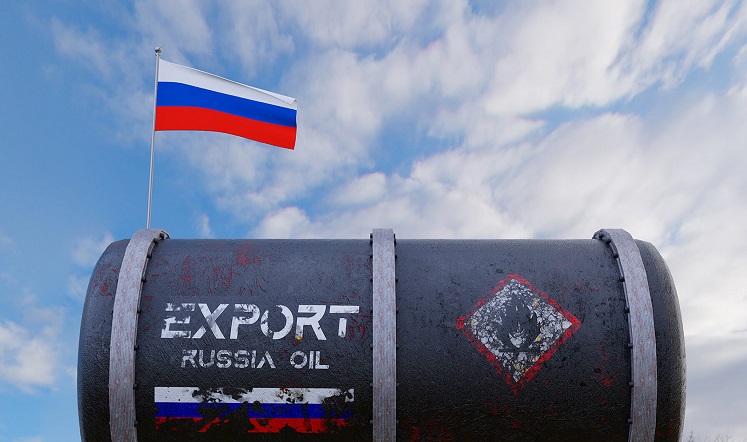

The volume of Russian and Iranian oil stored on ships has reached multi-month highs as stricter U.S. sanctions reduce the pool of buyers, limiting available tankers for delivery and driving up crude prices, according to trade sources and analysts.
Since October, Washington has intensified sanctions on vessels and entities involved in trading oil from Iran and Russia, disrupting supplies to key importers like China and India.
Last week, U.S. President Donald Trump renewed his “maximum pressure” campaign against Iran, aiming to eliminate its oil exports entirely to prevent Tehran from developing nuclear weapons.
Iran, an OPEC member, has struggled to secure enough vessels to address the shipping shortfall caused by the sanctions, particularly in the fourth quarter, said Xu Muyu, a senior analyst at data analytics firm Kpler.
Further complicating matters, China’s Shandong Port Group recently imposed a ban on sanctioned tankers at its ports in the eastern province. This region hosts most of China’s independent refiners, the primary buyers of Russian and Iranian oil, making it even harder for these cargoes to unload.
According to shipbroker Braemar ACM, 57% of the 126 Very Large Crude Carriers (VLCCs) involved in Iran’s oil trade to China are already under U.S. sanctions.
As exports rise but deliveries to China drop, Iranian oil held in floating storage has grown by 10 to 20 million barrels this year, based on estimates from three analysts. However, assessments of the total volume vary due to differing tracking methods for the so-called shadow fleet.
Kpler data shows Iranian oil floating storage exceeding 25 million barrels, the highest in over a year, with about 80% of these cargoes located off the coasts of Singapore and Malaysia.
In contrast, Emma Li, a senior analyst at Vortexa Analytics, estimates that Iranian crude and condensate in floating storage reached 73.1 million barrels by the end of January.
Li also noted that Iran’s exports climbed for a second consecutive month, reaching 1.78 million barrels per day in January, following a two-year low of 1.45 million barrels per day in November.
