


KLF 2025
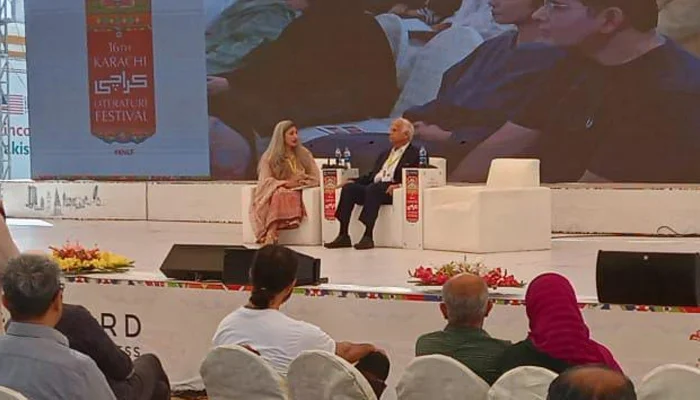
A compelling discussion on Pakistan’s rapidly growing population and its long-term implications took center stage at the 16th Karachi Literature Festival (KLF). Experts at the session examined the demographic challenges facing the country and explored potential strategies to transform these issues into opportunities for economic growth and sustainable development.
Moderated by Naeem Sadiq, the panel featured distinguished speakers, including Dr. Azra Fazal Pechuho, Lubna Naz, Rehana Ahmed, and Khalid Masud.
The discussion revolved around whether Pakistan’s demographic trajectory is a ticking time bomb or an untapped economic dividend. The panellists unanimously emphasized the urgent need for effective policy implementation and strategic planning to address the nation’s growing population crisis.
Pakistan, currently ranked as the world’s fifth most populous country, faces alarming statistics that highlight the gravity of the situation. Over 26 million children remain out of school, while 3.3 million are engaged in child labor.
Additionally, 1.2 million children resort to begging on the streets, and approximately 12 million suffer from malnutrition. In a stark reflection of the country’s rapid population growth, an estimated 17,554 babies are born daily.
Despite a global decline in the total fertility rate (TFR) over the last five decades—from 4.8 to 2.2—Pakistan’s TFR remains high at 3.6, significantly above sustainable levels. This surge in population necessitates the construction of at least 87 new schools per day to accommodate growing educational needs.
In comparison, regional counterparts have successfully managed to reduce their TFRs, with Bangladesh at 1.9, India at 2, Nepal at 2, Turkey at 1.6, Iran at 1.7, and Taiwan at a strikingly low 0.87. Meanwhile, all 27 European Union countries maintain TFRs below 2, with France leading at 1.79.
Dr. Azra Fazal Pechuho emphasized the crucial role of the private healthcare sector in managing Pakistan’s population challenges. She pointed out that while over 70% of the population relies on private healthcare services, the sector is primarily focused on revenue-generating treatments rather than national priorities such as family planning. “The government must take the lead in setting national goals for the private health sector,” she asserted, stressing that every clinic in Pakistan should be mandated to provide family planning counselling and awareness services.
She further highlighted that contraceptives, which are either donor-funded or imported, are classified as luxury goods, making them financially inaccessible for many due to high sales tax.
The panellists underscored the importance of significant investments in education, healthcare, and family planning to turn Pakistan’s growing population into an economic asset rather than a burden. They called for a collaborative strategy between the public and private sectors to tackle these challenges and capitalize on the potential of Pakistan’s youth.
Strengthening Pakistan-Bangladesh Relations
Another significant highlight of the third and final day of KLF 2025 was a session focused on fostering stronger Pakistan-Bangladesh bilateral relations. Prominent writer Ikram Sehgal delivered a thought-provoking address, advocating for enhanced cooperation and goodwill between the two nations. He proposed the introduction of visa-free travel between Pakistan and Bangladesh to strengthen people-to-people connections and promote cultural and economic exchanges.
During the session, Sehgal reflected on the historical trajectory of relations between the two countries, particularly after the assassination of Sheikh Mujibur Rahman. He recalled a key moment when former Prime Minister Nawaz Sharif visited Dhaka for a cricket match.
Despite concerns from the administration about potential protests, Nawaz was met with an overwhelmingly warm and enthusiastic reception, demonstrating the deep-rooted connection between the peoples of both nations.
A crucial aspect of the discussion was the plight of stranded Biharis in Bangladesh, a longstanding humanitarian issue. Sehgal passionately argued that these individuals are Pakistanis by identity and should have the right to return to their homeland. He urged both governments to take decisive steps in granting Biharis the freedom to choose whether to return to Pakistan or integrate into Bangladeshi society with full rights.
Drawing from his personal experiences, Sehgal recounted witnessing the brutal massacre of Biharis while piloting a helicopter over what was then East Pakistan.
He described how entire Bihari communities in Chittagong and railway colonies were attacked, their homes set ablaze in a tragic episode of history. He acknowledged that both sides committed atrocities during the 1971 conflict and emphasized the importance of learning from the past to ensure a peaceful future.
In a positive development, Sehgal highlighted that two female and one male cadet from Bangladesh are currently receiving training at the Pakistan Military Academy.
He noted that this cooperation signifies a growing mutual trust and a forward-thinking approach to strengthening diplomatic and military ties between the two nations. Providing military training to Bangladeshi cadets reflects a commitment to building a strong and stable regional partnership, he added.
Both discussions at KLF 2025 underscored critical issues that require immediate policy action. Whether addressing Pakistan’s population boom or fostering regional cooperation, experts stressed the need for strategic planning, governmental leadership, and collaborative efforts to shape a sustainable and prosperous future.
