

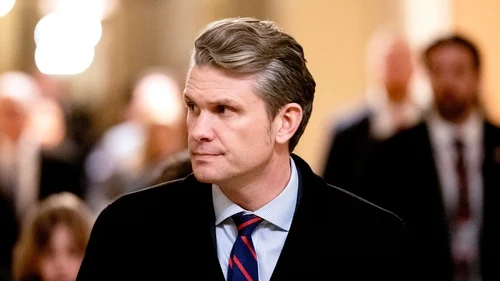

Hegseth’s confirmation marks only the second tie-break vote in cabinet history, following intense opposition from Democrats and some Republicans.
Pete Hegseth secured his confirmation as the next US Defense Secretary on Friday after a tight 50-50 vote in the Senate. Vice President JD Vance cast the deciding vote, breaking the tie and solidifying Hegseth’s position despite strong resistance from both Democrats and a few Republicans.
Hegseth, a former Fox News personality and decorated military veteran, was sworn in by Vance on Saturday. In his first remarks as Defense Secretary, he outlined his key priorities: “restoring the warrior ethos, rebuilding our military, and re-establishing deterrence.” He also emphasized the importance of working with allies to counter threats, particularly from Communist China in the Indo-Pacific region, while supporting President Trump’s agenda to responsibly end ongoing conflicts.
Hegseth’s confirmation represents a major win for President Trump, but it came after a bruising confirmation process that questioned his qualifications, leadership abilities, and controversial views on issues like women in combat.
A Divisive Nominee
Hegseth’s appointment has sparked considerable debate. He is one of the most divisive figures ever nominated for the top military post, which traditionally goes to candidates with extensive experience in military leadership and management. This marks only the second time in history that a cabinet nominee’s confirmation was decided by a tie-break vote. The first instance was in 2017, when Betsy DeVos was confirmed as Education Secretary.
The three Republican senators who voted against Hegseth were Lisa Murkowski, Susan Collins, and Mitch McConnell, who had been the party’s leader in the Senate until this month. McConnell criticized Hegseth’s lack of demonstrated ability to manage a large and complex organization like the Pentagon, stating, “Mere desire to be a ‘change agent’ is not enough to fill these shoes.”
Top Democrats, including Senator Jack Reed of Rhode Island, also expressed concerns, with Reed pledging to hold Hegseth accountable during his tenure.
Hegseth will now oversee 1.3 million active-duty service members and nearly 1 million civilian employees, managing a defense budget that exceeds $1 trillion annually. However, his experience in such a vast role is limited; he has only managed teams of up to 100 people and budgets of up to $16 million.
Controversies and Allegations
Hegseth’s path to confirmation was clouded by various allegations. He faced accusations of abuse from his former sister-in-law, who claimed that his second wife had to hide in a closet to escape from him. Hegseth has vehemently denied these claims, as has his wife.
Additionally, his views on military policies have raised eyebrows. Hegseth has been a vocal critic of diversity, equity, and inclusion initiatives in the military and has questioned whether race played a role in the selection of top military officials. He has also previously opposed women in combat roles, though he later softened his stance during the confirmation process, hoping to gain support from key figures such as Republican Senator Joni Ernst.
Hegseth’s nomination also faced scrutiny over accusations of financial mismanagement at veterans’ organizations and claims of excessive drinking, which he denied. He has pledged to abstain from alcohol if confirmed.
Trump’s Influence and Military Priorities
President Trump’s strong backing of Hegseth highlighted his influence within the Republican Party. Despite the opposition, most Republican senators ultimately supported Hegseth, praising his vision to reinvigorate the military.
Hegseth takes office as the Trump administration ramps up its focus on border security and immigration. On Friday, US military C-17 aircraft began transporting detained migrants out of the country, marking the first time in recent memory that the US military has been involved in deportations. The Pentagon also announced plans to send 1,500 active-duty troops to the southern border, with the number expected to increase.
Uncertain Foreign Policy Stance
Hegseth’s views on key foreign policy issues remain unclear. It is uncertain where he stands on matters such as military support for Ukraine, preparing for potential conflict with China, or whether he would reduce the US military’s presence in places like Syria and Iraq.
Hegseth’s confirmation vote, which fell largely along party lines, reflects a departure from the tradition of bipartisan support for the Defense Secretary role. For context, former Defense Secretary Lloyd Austin was confirmed by a 93-2 vote in 2021, while Jim Mattis, Trump’s first Defense Secretary, received 98-1 support in 2017.
