

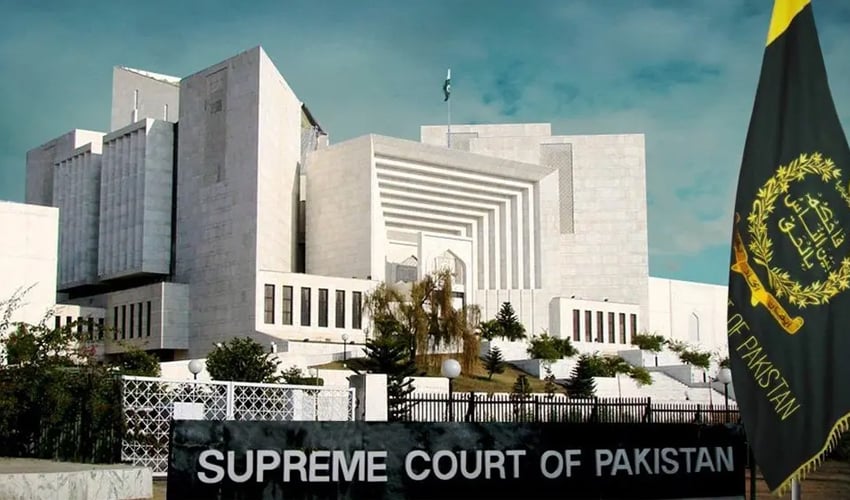

ISLAMABAD: The Supreme Court on Thursday questioned the government’s justification for prosecuting civilians in military courts while others involved in the same incidents are being tried in anti-terrorism courts (ATCs).
“In the May 9 incidents, cases against 103 accused were tried in military courts, while the rest are being tried in anti-terrorism courts,” remarked Justice Naeem Akhtar Afghan during the hearing.
A constitutional bench, led by Justice Amin-Ud-Din Khan, heard intra-court appeals challenging the decision to try civilians in military courts.
Background of the Case
On October 23, 2023, a five-member Supreme Court bench unanimously ruled that civilians’ trials in military courts were unconstitutional, directing that 103 suspects be tried in civilian courts instead.
However, on December 13, 2023, a six-member bench, with Justice Musarrat Hilali dissenting, suspended the October 23 verdict following petitions challenging the decision. The matter was further contested, and military courts were conditionally permitted to pronounce reserved verdicts in December 2023 for 85 civilians allegedly involved in the May 9 riots.
These riots erupted following the arrest of the PTI founder in a corruption case and included attacks on state installations, such as the General Headquarters. In the same month, military courts convicted all 85 accused, though 19 were later pardoned after appealing for mercy.
Judges Raise Concerns Over Legal Process
The bench raised several critical questions about the process of trying civilians in military courts:
- Justice Jamal Khan Mandokhail inquired, “Who decides where a case is to be tried, and on what basis?” He further questioned, “Is special evidence presented in military courts that justifies their involvement?”
- Justice Naeem Akhtar Afghan asked how the distinction is made between cases assigned to military courts and ATCs, with Justice Muhammad Ali Mazhar pressing for clarification on whether ATCs issue specific verdicts allowing cases to be handed over to military courts.
- Justice Mandokhail also questioned why ATCs are not strengthened to handle such cases and added, “We respect all courts, including military ones, but they must adhere to the Constitution.”
- Justice Hasan Azhar Rizvi raised the point of whether the May 9 riots constituted a crime more severe than terrorism itself.
Court’s Stance and Adjournment
Justice Amin-Ud-Din clarified that the bench cannot issue an order concerning individuals who have already been convicted. The hearing was adjourned until tomorrow for further deliberations.
This ongoing case underscores the debate over the constitutionality and transparency of military courts handling civilian cases, particularly in politically charged incidents like the May 9 riots.
