

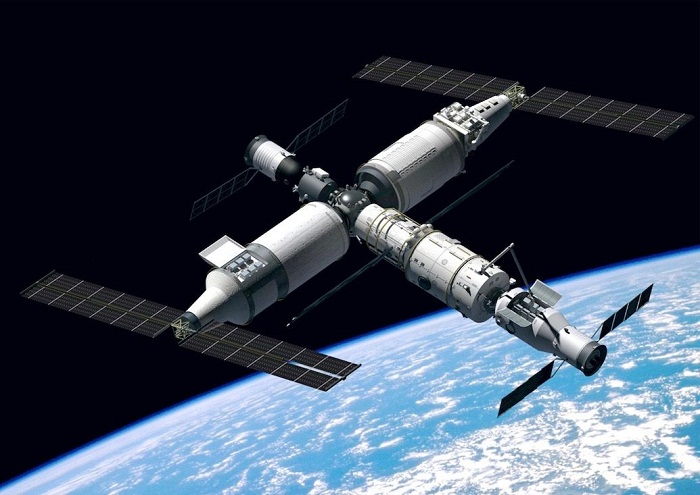

The International Space Station (ISS) has made an unexpected and groundbreaking observation in the aftermath of Hurricane Helene, which struck Florida’s coast in late September 2024. While the hurricane unleashed devastating rain and winds at ground level, it also triggered atmospheric ripples detected 55 miles above the Earth’s surface, shedding light on the far-reaching impacts of severe weather.
NASA scientists revealed that such storms can disturb atmospheric layers at extraordinary altitudes, particularly the mesosphere—a region located between 31 and 55 miles above Earth. Traditionally thought to be far removed from the effects of surface weather, the mesosphere has now been shown to react significantly to intense storms like hurricanes.
During Hurricane Helene’s landfall, NASA’s Atmospheric Wave Experiment (AWE), installed on the ISS in 2023, detected “atmospheric waves” unrelated to the gravitational ripples predicted by Einstein’s theories. These waves were instead created by the hurricane’s intense energy, demonstrating how severe weather can disrupt the upper atmosphere.
Michael Taylor, a NASA researcher, emphasized the importance of this discovery: “This observation provides new insights into how storms influence the upper atmosphere. The ISS’s unique vantage point allows us to capture details invisible from the ground, unlocking new possibilities for studying weather and atmospheric dynamics.”
AWE, designed to monitor faint “atmospheric glow” caused by gases at high altitudes, recorded ripple-like disturbances extending westward from the hurricane’s core. These ripples traveled far beyond the immediate impact zone, revealing how Helene’s power affected areas well outside its visible reach.
The mesosphere, with its frigid temperatures of -150°F (-101°C), remains one of the least explored atmospheric layers due to its inaccessibility. However, instruments like the Advanced Mesospheric Temperature Mapper (AMTM) have allowed scientists to detect subtle infrared signals that reveal hidden atmospheric activity.
These findings could have significant implications for satellite operations, as the thin but vital upper atmosphere helps maintain the stability of orbiting equipment. Even minor disturbances in this region can create unexpected resistance, impacting satellite performance.
This discovery represents a step forward in understanding the connection between surface weather events and atmospheric behavior at extreme altitudes, offering valuable insights into how Earth’s weather systems interact with space environments.
