

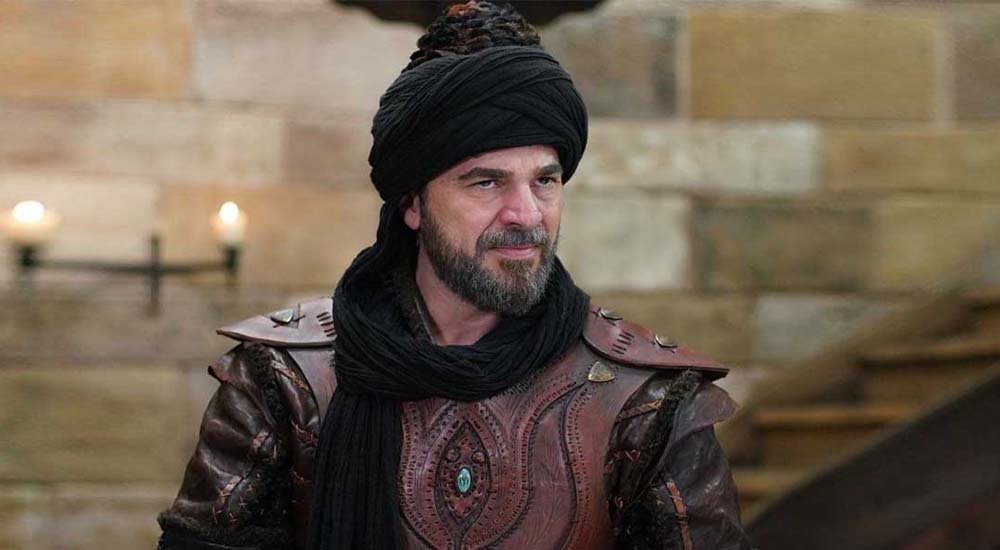

Turkish actor Engin Altan Düzyatan, renowned for his portrayal of Ertugrul in the hit series Diriliş: Ertuğrul, credited Pakistan and its people for helping him gain international fame.
During a conversation with actor Nurgül Yeşilçay at the Red Sea International Film Festival, Düzyatan shared that while audiences from Turkey and around the world are similar, he realized after starring in Ertugrul that the show received special attention globally. He specifically mentioned that the series became even more popular outside of Turkey, particularly in Pakistan. “The people of Pakistan have so much love for this character. Viewers may be similar across the world, but it’s a different ballgame in Pakistan,” he said.
Reflecting on how the role of Ertugrul impacted his personal life, Düzyatan explained that while the character didn’t change him, it influenced him just as he influenced the character. He noted that Ertugrul is a figure with little historical documentation, so he contributed to shaping the role as much as he could during the show’s production. “Every role is important to me, but Ertugrul was special because it made me popular worldwide. It allowed me to portray different stages of the character’s life,” he said.
Düzyatan, who has been acting since the age of 15, revealed his ambition to portray Mustafa Kemal Atatürk at some point in his career. He also shared his feelings about being invited to the prestigious Saudi Arabian film festival, expressing honor and excitement. “Movies bring people from different countries closer. In times of wars and conflicts, here we are talking about love and movies, which make people happy,” he commented.
Discussing his shift from acting to producing, Düzyatan explained that after a while, acting felt limiting. “You act on somebody else’s ideas and you’re just a small piece in a larger project. You want to develop and show your own stories.” He produced two documentaries before venturing into bigger production projects, emphasizing that producing requires as much creativity as acting.
On the difference between television and film acting, Düzyatan noted that characters in series don’t have the same depth as those in movies, primarily due to time constraints. “Movies delve deeper and leave a greater impact on the artist,” he said. He also mentioned his challenging role in the series Jannat, where he portrayed a person suffering from psychosis.
Yeşilçay, who was also part of the conversation, discussed her experience playing a deaf character in Adam and the Devil. She said it was a challenging role and shared that her background in theatre made her feel no difference between acting in movies and television dramas. She also described her recent theatre experience, revealing that she fainted on stage and developed a phobia. However, she expressed her intent to return to the stage once she overcomes it.
After the discussion, a documentary titled Tales on the Banks of Bosporus, which focuses on the rise of Turkish television dramas, was screened. Düzyatan and Yeşilçay, who were featured in the documentary, watched it with the audience. The film highlighted how the Turkish drama industry grew from a modest $300,000 to a billion-dollar industry, attracting international viewers from around the world. It traced the rise of Turkish shows, starting with their success in Azerbaijan and spreading to the Middle East, North Africa, Central Europe, and beyond. Today, Turkish dramas are watched in about 150 countries, with a significant presence in regions such as South America and East Asia. The documentary also pointed out the role of music and local language dubbing in the success of Turkish series globally.
