


Jind Kaur, along with her young children—twin sons aged one and a daughter aged two—was forced to flee her home in 2006 amid growing militant attacks and rising religious intolerance targeting the Sikh community in Khyber Pakhtunkhwa (KP), then known as the North-West Frontier Province (NWFP). Her husband, a shop owner and property holder in the Khyber district, was murdered by extremist groups. After his death, Jind sought refuge in Peshawar, where she has been working as a domestic worker to support her family.
Sarjeet Kaur’s Tragic Loss and Struggles
Sarjeet Kaur’s story is one of immense grief and hardship. In 2009, she fled Kurram due to escalating violence against Sikhs. She married Dayal Singh, and the couple, along with their four children, settled into a two-room rented house. Their life took a tragic turn when Sarjeet dropped her sons off at a local Sikh school and went to pay the electricity bill. The shop she was heading to was near her husband’s, but upon arrival, she found him dead in a pool of blood. Despite her desperate cries for help, no one came to her aid.
“I still don’t know why my husband was killed,” Sarjeet says, questioning the lack of justice. “If we are not safe even in Peshawar, where can we go?”
Months after her husband’s murder, the killers remain unidentified, and the family has received no state compensation. Struggling to care for her four children and ensure their education, Sarjeet found work at the Jogan Shah Gurdwara. Yet, despite the support from her community, the emotional and financial burden of her husband’s brutal death makes it hard for Sarjeet to provide her children with a sense of normalcy.
The Decline of the Jogan Shah Neighborhood
Once a vibrant community known as “Mini Amritsar,” the Jogan Shah neighborhood in Peshawar now reflects the devastating effects of violence. Today, it is predominantly home to Sikh widows who have lost their husbands to religious extremism. The area’s Sikh community school remains locked during the day for safety reasons, and residents live in constant fear.
Sarjeet laments, “I want my children to play outside like any other children, but every time I remember my husband’s murder, I get scared and keep them indoors.” To keep her children occupied, she converses with them and provides toys, but the trauma persists.
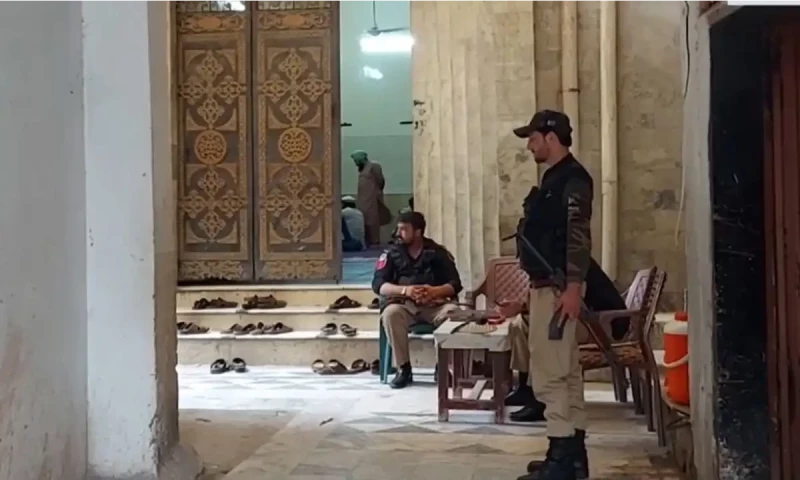
Security in the neighborhood has increased, with police officers stationed at the entrance 24/7, including a plainclothes officer during the day. “Earlier, there was only one officer here, but after a murder this year, the security was stepped up,” a security officer shared on condition of anonymity.
The Forced Exodus of Sikhs from KP
There has been no official survey to determine the current Sikh population in KP. Baba Garpal Singh, a community representative, recalls that many Sikh families once lived in various districts like Khyber, Orakzai, and Kurram. However, worsening security forced many to leave, seeking refuge in places like the Gurdwara Bhai Joga Singh in Peshawar and Gurdwara Panja Sahib in Hassan Abdal, Punjab. The Pakistan Sikh Gurdwara Parbandhak Committee (PSGPC) and Gurdwara Bhai Joga Singh Committee helped with the relocation efforts.
For decades, many Sikhs operated businesses in Peshawar’s Karkhano market and Dabgari Gardens, but targeted killings led them to move to other provinces, particularly Punjab, in search of safety.
Gurpal Singh, a Sikh leader, explains, “Our properties in Khyber, Tirah, and other districts were seized, and many had to sell their homes and businesses at a loss to leave. We no longer expect anyone—neither the government nor agencies—to protect us, so our community chose to leave the province.”
