

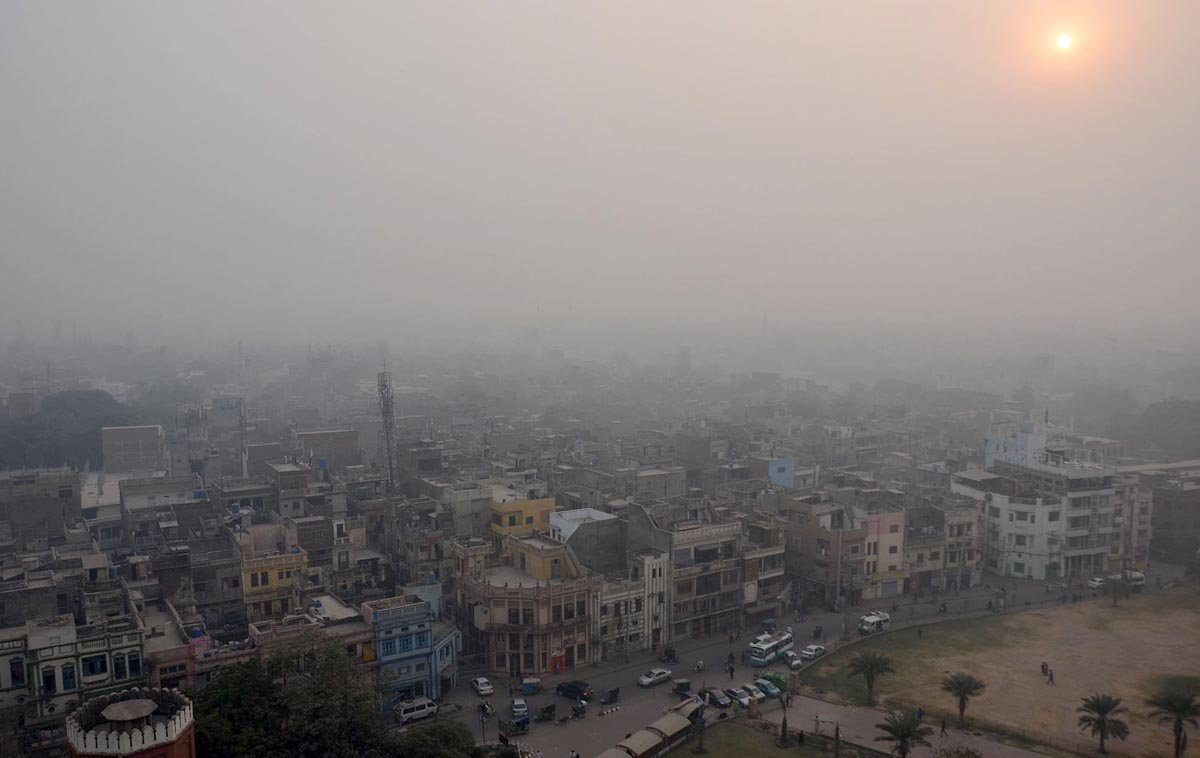

The Meteorological Department has issued a warning about potential smog affecting several regions of Pakistan from mid-November to December. This advisory indicates that the smog may pose serious health risks and worsen air quality, especially in cities such as Lahore, Gujranwala, Sheikhupura, Kasur, Nankana Sahib, and Faisalabad. The department has emphasized that the smog could aggravate respiratory ailments, including asthma.
Additionally, the smog can lead to travel disruptions due to decreased visibility. Currently, Lahore’s air quality has deteriorated to hazardous levels, with the Air Quality Index (AQI) soaring to a concerning 367, making it the most polluted city globally.
International air monitoring agencies report that the concentration of harmful substances in Lahore’s atmosphere is 50 times higher than the World Health Organization’s (WHO) recommended limits. The most severely affected areas include Defense Phase 8, where the AQI reached a perilous 443. Walton and nearby localities reported an index of 362, while other areas, such as Davies Road (296), Wapda Town (292), and Cantt (284), also exhibited extremely high pollution levels.
The air in Lahore is filled with harmful substances like sulfate, nitrate, and carbon, creating significant health hazards. Medical professionals have warned that the air quality in the city has become “poisonous,” urging residents to wear filtered masks when going outdoors to safeguard against these toxic pollutants.
q
