

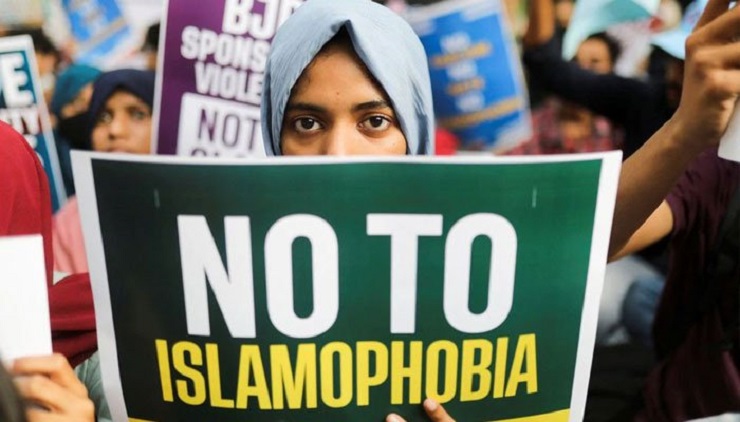

Discrimination and attacks against Muslims and Palestinians in the U.S. surged by about 70% in the first half of 2024, fueled by heightened Islamophobia linked to Israel’s war in Gaza, according to the Council on American-Islamic Relations (CAIR).
Human rights advocates have noted a global rise in Islamophobia, anti-Palestinian bias, and antisemitism since the Israel-Gaza conflict erupted in October, resulting in tens of thousands of deaths and a humanitarian crisis.
CAIR reported receiving 4,951 complaints of anti-Muslim and anti-Palestinian incidents in the first six months of 2024, a nearly 70% increase compared to the same period in 2023. These complaints largely fell into categories such as immigration and asylum, employment discrimination, education discrimination, and hate crimes.
In 2023, CAIR documented 8,061 such complaints over the entire year, with approximately 3,600 occurring in the last three months after the war began.
Significant incidents in the past nine months include the fatal October stabbing of a 6-year-old Palestinian-American child in Illinois, the February stabbing of a Palestinian-American man in Texas, the shooting of three students of Palestinian descent in Vermont in November, and the attempted drowning of a 3-year-old Palestinian-American girl in May.
Numerous protests have taken place in the U.S., Israel’s key ally, against the Gaza war since October. The CAIR report highlighted the police and university authorities’ crackdown on pro-Palestinian protests and encampments on campuses.
The latest escalation in the long-standing Israeli-Palestinian conflict began on October 7 when the Palestinian Islamist group Hamas attacked Israel, killing 1,200 people and taking about 250 hostages, according to Israeli sources.
The Gaza health ministry reports that Israel’s military response has killed nearly 40,000 Palestinians, displaced nearly the entire population of 2.3 million, caused a hunger crisis, and led to genocide allegations that Israel denies.
CAIR compiles its data by reviewing public statements and videos, as well as reports from public calls, emails, and an online complaint system. They also contact individuals whose incidents are reported by the media.
